EN

They’re here! They appeared without warning over the summer, catching quite a few SEO professionals off guard. AI Overviews officially arrived in France on July 22, 2026, more than a year after their rollout in several neighboring countries. In March 2025, Google had already launched them in Germany, Italy, Spain, Belgium and Switzerland, among others.
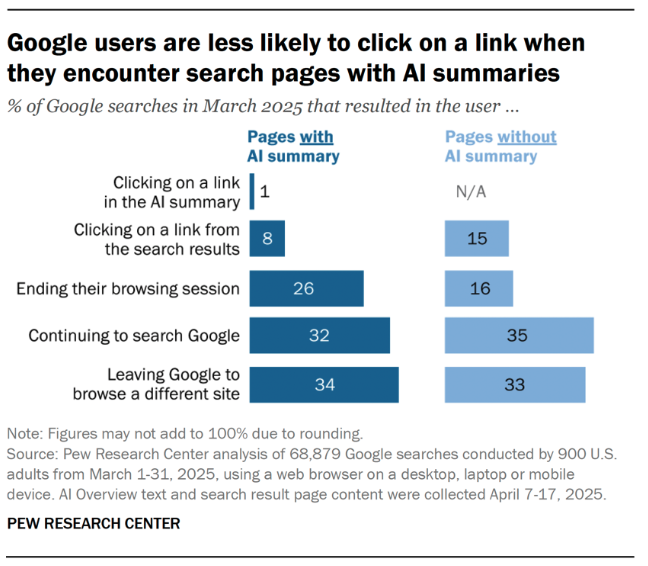
Since then, of course, SEO professionals have been questioning and worrying about their impact on their websites’ organic traffic. And with good reason: the impact on click-through rate is very clear. Ahrefs estimates that, for the informational queries studied, the presence of an AI Overview is now correlated with an average 58% drop in the CTR of the page ranking in first position. The Pew Research Center, for its part, observed that US users clicked on a traditional search result in 8% of visits when an AI summary was present, compared with 15% when it was not. The links cited directly in the AI Overview themselves received a click in only around 1% of the visits studied.
So how do you build a content strategy in the age of these AI Overviews? That is what we explain in this article.
Today, there is hardly an SEO professional who has not heard of the famous “crocodile effect” (or the “hippopotamus effect” in the worst cases…). It refers to the widening gap between two curves: impressions, which are generally rising, on the one hand, and clicks, which are stagnating or even declining, on the other.
The arrival of AI Overviews mechanically reinforces this phenomenon.
They already provide users with very good information, and reading them can be enough to find the answer to a question. Whereas users previously had to consult one or more results to build their answer, Google can now provide them with a summary directly on the search results page. For some searches, reading that answer may be enough: the user has obtained the information they were looking for without necessarily having to visit the website it came from.
Pew Research Center data illustrates this change in behavior well. In its study of the browsing activity of 900 US adults in March 2025, users were not only less likely to click when an AI summary appeared, but also more likely to stop browsing altogether after the results page.
After all, AIOs are simply a logical next step for Google: before them, there were already People Also Ask, the Local Pack, Google Shopping and other features that provide part of the answer directly in the SERP. One after another, these features have eroded click-through rates.
Clicks are therefore no longer the “king” KPI. That obviously does not mean they should no longer be monitored: organic traffic remains extremely important, particularly when it leads to a conversion. However, judging an entire SEO strategy solely on the number of clicks is becoming less and less representative of a brand’s actual visibility — and given the declines, it is rather depressing, let’s admit it!
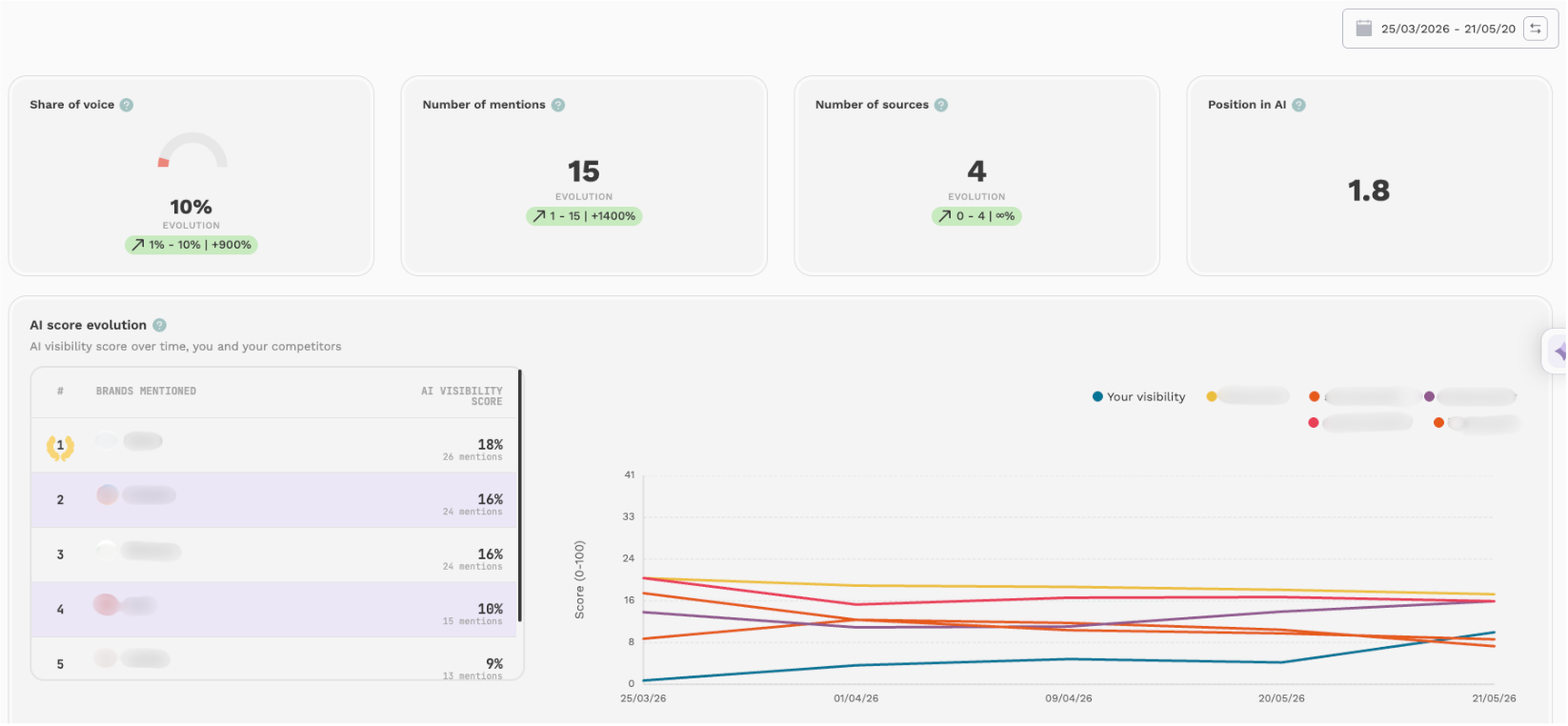
We are therefore seeing the emergence of new KPIs that are more representative of AI:
Informational content is obviously the most affected by AI Overviews. And that makes perfect sense: an informational query is precisely a query in which the user is looking for an answer. When they type a question into Google and an AI Overview immediately provides a satisfactory summary, the need to consult a guide, definition or explanatory article decreases.
Not to mention the possibility for users to continue the conversation in AI Mode: an initial question can therefore lead to other questions, comparisons or requests for clarification without the user clicking on your website even once — assuming your site is present there. Google also states that a query made in AI Mode is, on average, three times longer than a traditional search.
However, AI Mode should not be considered simply a more developed version of AI Overview. According to an Ahrefs study, only 13.7% of citations appear in both AI Overview and AI Mode. Yet the answers produced remain semantically very similar in around 90% of cases: the two experiences can therefore provide a similar answer while sourcing their information from different places.
AI Mode also features more potential sources because its answers are generally longer. This mechanically creates a different environment from AI Overviews, and therefore different competition for being cited.
Between this and the rise of LLMs, you might wonder whether creating a 5,000-word guide on a topic is still worthwhile when some users get the information they need before they even reach the website.
In reality, content is not dead: its role is simply changing.
Where it used to attract organic traffic, it now serves as a source of information that may be used in an answer generated by Google. The website therefore becomes an information provider.
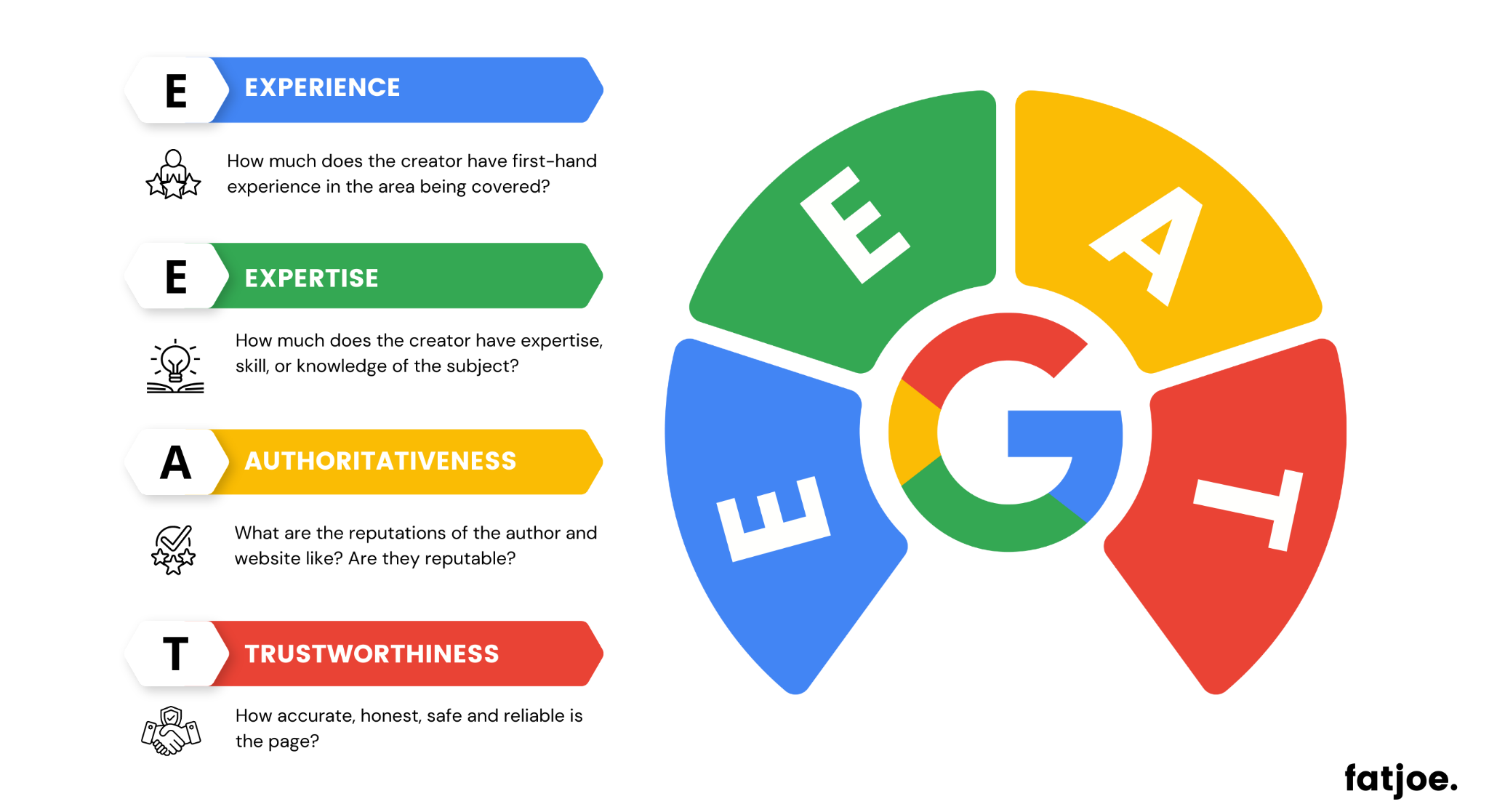
This changes how the ROI of content should be considered. An article may receive fewer clicks than before while still helping to demonstrate the brand’s expertise on a topic (EEAT), strengthen its semantic presence around certain subjects and, above all, allow it to be cited or mentioned in the answers shown to users.
And that presence is not useless simply because it does not immediately generate an Analytics session. Even without a click, the brand name can be seen and associated with a specific problem, product or service.
Visibility is therefore no longer limited to the traditional question: “Is my URL ranking first on Google?” The question also becomes: “When Google answers my prospect, are my brand and my content part of the answer?”
This development makes commercial and infomercial content even more important.
The idea is simple: the closer the user gets to taking a concrete action, the harder it becomes to meet their entire need with a simple informational summary such as an AIO. Accurately comparing offers, understanding the differences between several products, checking prices or assessing a provider often requires access to information held by the companies themselves.
We have indeed observed that AI Overviews appear less frequently for commercial, infomercial and transactional queries. However, their presence continues to grow for this type of query.
Content therefore needs to be considered beyond purely informational material: content that supports users as they compare, evaluate and choose is becoming more important. An editorial strategy made up only of large informational guides is therefore likely to be much more fragile than before.
That is all very well, but how do you actually create content in the age of AIOs?
While “classic” SEO best practices obviously still apply, some of them are becoming more important, while other rules need to be added:
We create our content for humans, but it also needs to be correctly understood by the bots and agents that read it.
You therefore need to adapt the way you create content. This means:
With all these changes and best practices, it is easy to forget one essential point: in 2026, a brand cannot exist and be visible through its website alone. That was already difficult before; AI Overviews simply make relying on the website alone even riskier.
As explained earlier, AI Overviews split their searches into sub-searches, or query fan-outs. The generated answers can therefore draw on different sources across the Web. The Pew Research Center also states that Wikipedia, YouTube and Reddit are among the domains most frequently cited in the AI Overviews it observed (although this has recently tended to change, particularly for Reddit).
Depending on the question, bots will also look for signals that a brand can be trusted: on forums, on social networks… Your website is no longer the only source; it is just one element among others in your online presence.
Google’s different AI experiences do not appear to rely on exactly the same types of sources either. Available analyses show that AI Mode tends to cite long, heavily sourced content more often, while AI Overviews feature more videos and community platforms. In other words, diversifying formats and platforms does not only increase the number of touchpoints with the user: it can also multiply the opportunities to be used as a source.
On a web where the user journey increasingly takes place outside your own pages, you need to use every lever available to you. This is what is known as Search Everywhere Optimization: being present on the platforms your audience actually uses.
Always make sure you respond properly to reviews, both positive and negative. This adds context to the reviews and is taken into account by Google.
Here are some examples of well-known review sources:
- Google Business Profile
- Trustpilot
- Avis Vérifiés
→ Every mention is an additional signal, both for Google and for LLMs, as well as another gateway for users.
The question is therefore no longer simply how to make your own website appear in Google, but how to build a coherent presence around the same entity across all the spaces your audience consults.

Here is a concrete action plan for building a content strategy in the age of AI Overviews:
Google provides specific documentation for these different types of data and recommends testing their implementation.
There are, of course, many others, some of which correspond to very specific sectors or types of content.
It cannot be repeated often enough: remember the changing role of informational content mentioned at the beginning of the article. It may generate less direct traffic than before while still helping establish the brand’s expertise and providing information that may be picked up by search engines. In short, it boosts your EEAT.
The important thing is therefore to stop evaluating all these types of content according to the same criterion. An informational guide, a comparison and a pricing page do not play the same role in the funnel and do not necessarily need to produce the same type of result.
The strategy must then move beyond the website.
This is where everything explained above is put into practice: identify the platforms that are relevant to the persona and develop a coherent presence there.
Content should therefore no longer be considered only in terms of pages to publish on the website, but also in terms of formats and touchpoints.
One question may require an article. Another will be better handled in a video. A piece of information can be shared on a social network. Conversations around a topic may already exist on Reddit. Customer feedback lives on review platforms.
The role of the strategy is to connect these different spaces rather than treat them as independent silos.
Finally, a strategy only truly exists if you are able to measure its concrete results.
The goal is not to accumulate dashboards. It is to understand what works: which content can still generate traffic? Which content is gaining visibility? Which pages are cited? Which topics need to be strengthened or updated?
Do you sell consulting services, with a large share of your acquisition relying precisely on informational content?
The potential decline in organic traffic does not mean you should abandon content. Instead, you should look for more reasons for people to visit the website directly.
There are solutions:
Ultimately, the idea is to stop treating informational content as the only possible gateway.
We often think of AI as a “constraint”: for the past two years, much of the SEO discussion around artificial intelligence has boiled down to one question: “How can we appear in AI answers?”
That is obviously an important question. But AI can also become an ally of the content strategy: making certain tasks easier, automating part of the work, helping to create tools or improving existing content.
The conclusion of all this? To build a content strategy in 2026 in the age of AI Overviews, content quality — and above all its comprehensiveness — is more important than ever. Another cornerstone of content in the age of AI Overview is knowledge of the persona. Knowing who to speak to, when and how makes all the difference. This also requires a necessary shift in mindset: the challenge is no longer simply to adapt to the new SERP, but to build a content strategy in which the website, Google, generative engines, social networks, community platforms and other touchpoints are no longer treated separately, but as different components of the same visibility ecosystem. Diversity of formats is also essential: we no longer simply create blog posts. We create video testimonials, comparison guides, attractive visuals, how-to guides and expert interviews.




.svg)