EN

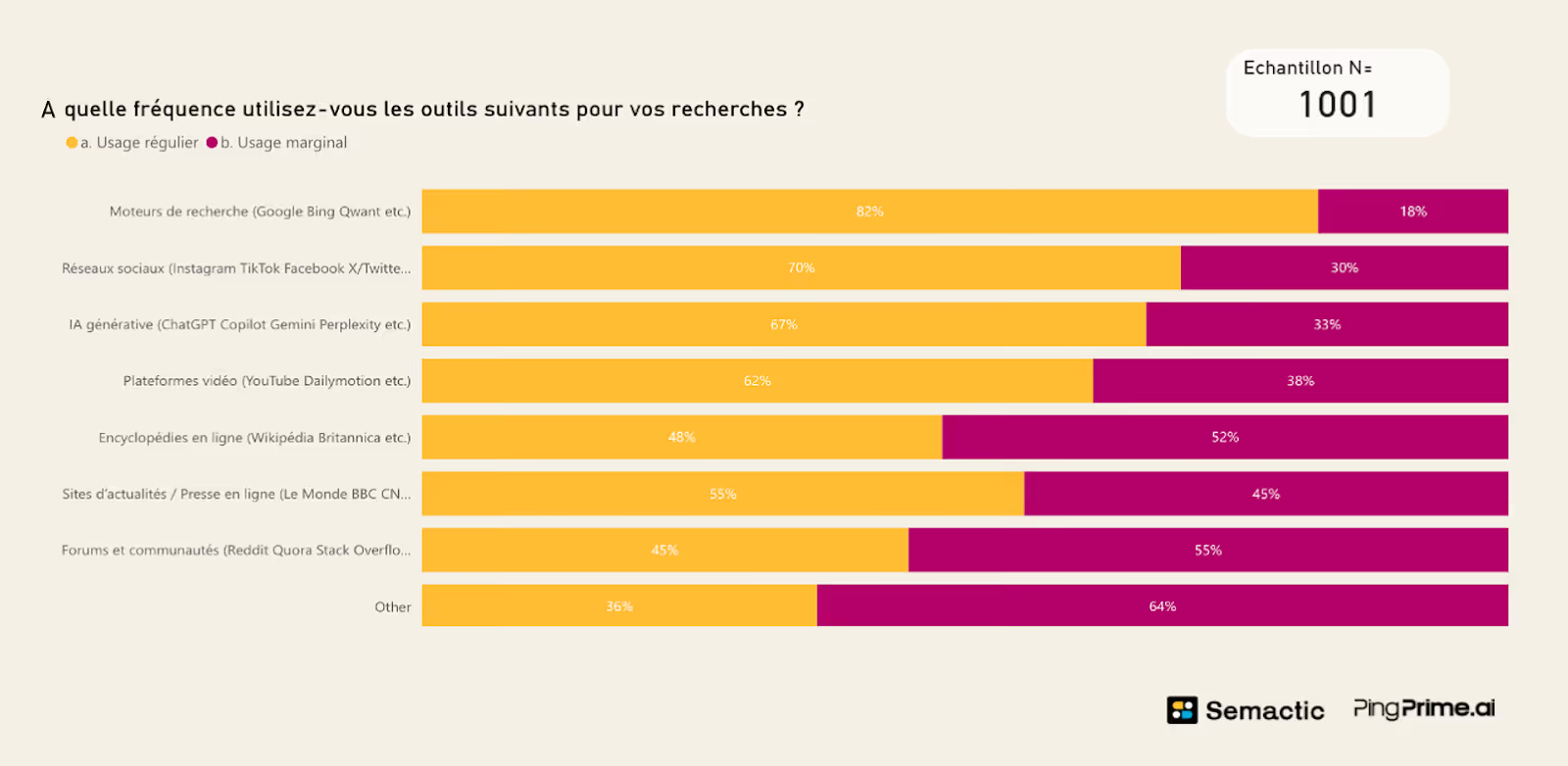
67% of respondents—nearly 7 out of 10 Belgians—say they use generative artificial intelligence at least occasionally in their online searches. This is revealed in the first Belgian study on search behavior, “Belgians in the age of generative AI,” conducted by Semactic in collaboration with PingPrime.ai and carried out by IntoTheMinds.
These figures reflect a society undergoing rapid change: practices are diversifying, behaviors are evolving quickly, but trust remains an essential guiding principle.
Artificial intelligence is becoming part of everyday life, without changing deeply ingrained habits.
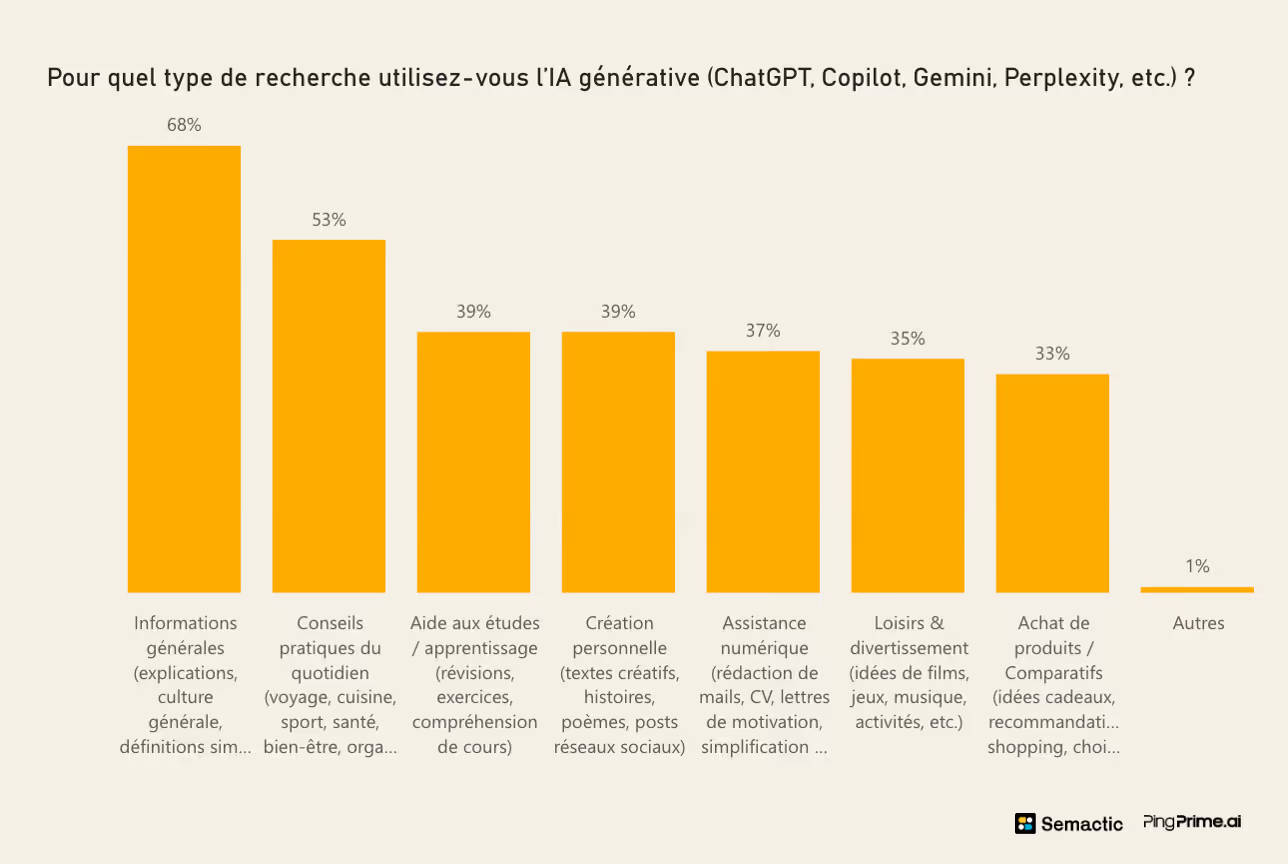
According to the study, users of generative AI mainly use it to obtain information (68%), get practical advice (53%), or learn (39%).
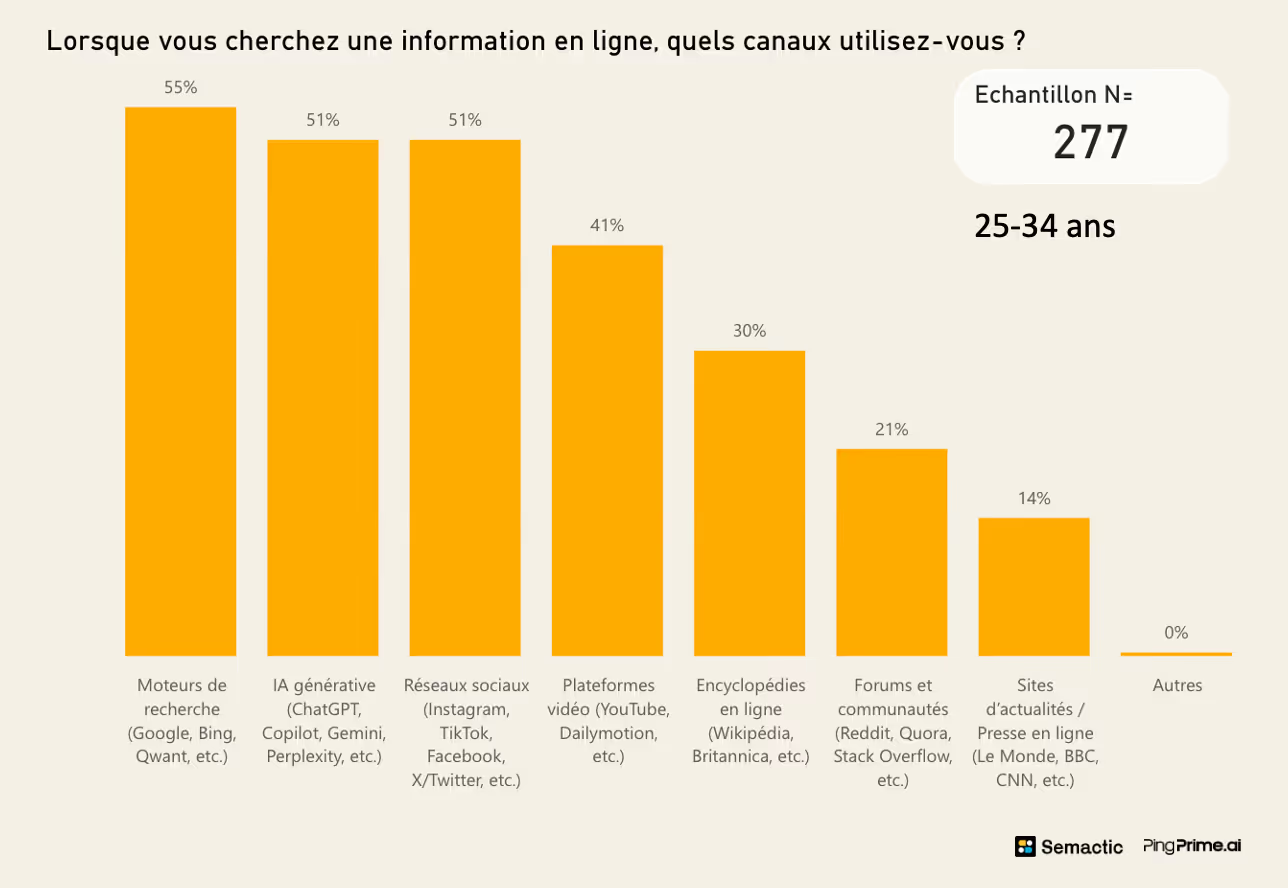
Younger generations (25-34 years old) remain the most active in adopting these new tools, while those aged 55 and over continue to favor traditional search engines.
Behind these trends lies a clear generational divide:
Young people are expanding their avenues to access information—through social networks, video platforms, and conversational content—while older generations remain loyal to institutional sources like Google or Wikipedia.
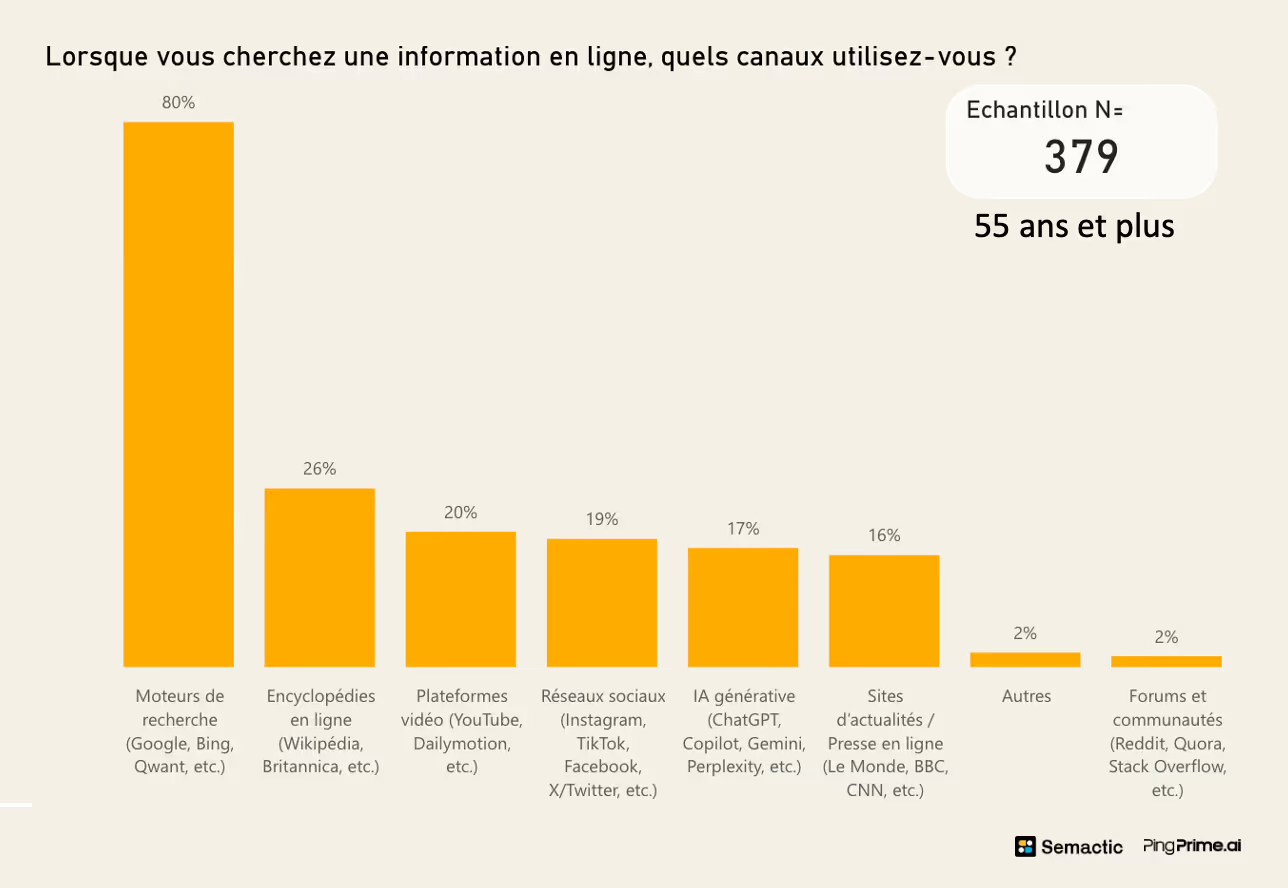
Entry points are rapidly diversifying: a majority of Belgians get their information through social networks (broadly speaking), an increasing number through video platforms, and a significant portion interacts with online communities—especially among those aged 25-34.
"This fragmentation reflects a true cultural shift: search is no longer linear, but multiple, contextual, and conversational."
— Céline Naveau, co-founder of Semactic
Search engines remain dominant with 80% usage, but social networks, video, and AI assistants are rapidly gaining ground.
Nearly 3 out of 4 Belgian internet users report formulating their searches in natural language: either exclusively in complete sentences (37%) or by alternating between keywords and complete sentences depending on the context (38%).
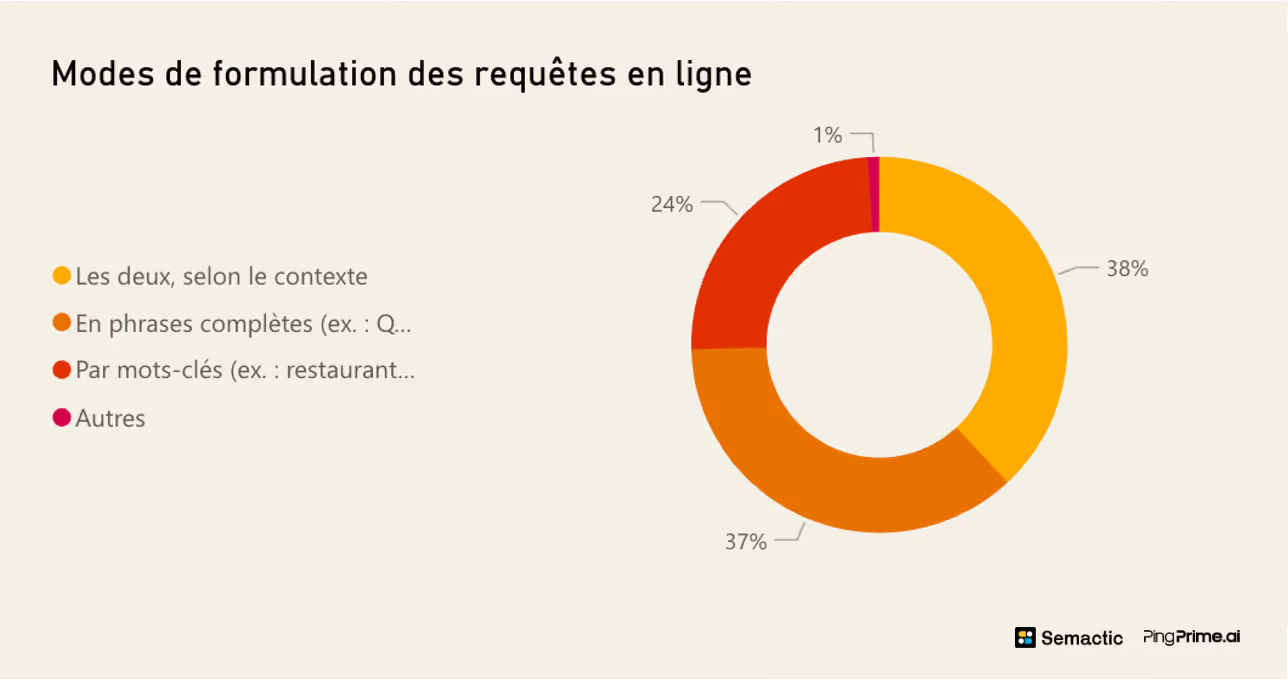
This evolution confirms that search is becoming more conversational, more natural, and closer to spoken language.
Nearly 4 out of 10 internet users also use queries in the form of complete sentences in a dialogical logic, and 1 in 2 turns to voice search—especially at home or to speed up the process.
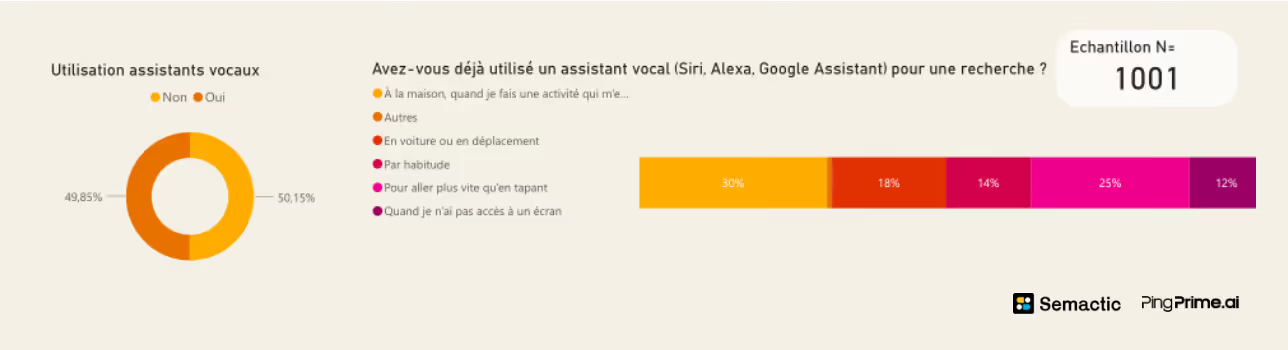
In other words: we no longer search only for where to find an answer, but how to formulate it and with whom to co-construct it.
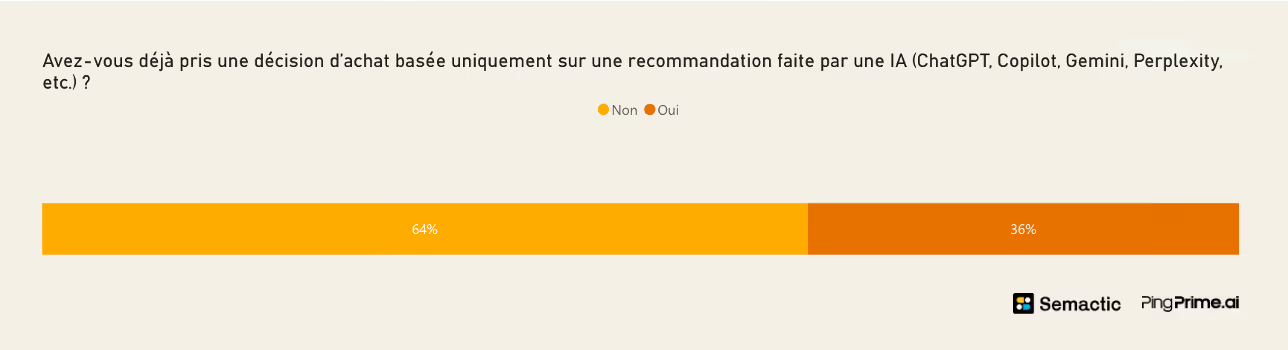
Nearly 4 out of 10 Belgians acknowledge that AI influences their decisions - sometimes without fully realising it - and for 36% of them, this influence has already resulted in at least one purchase based solely on an AI-generated recommendation.
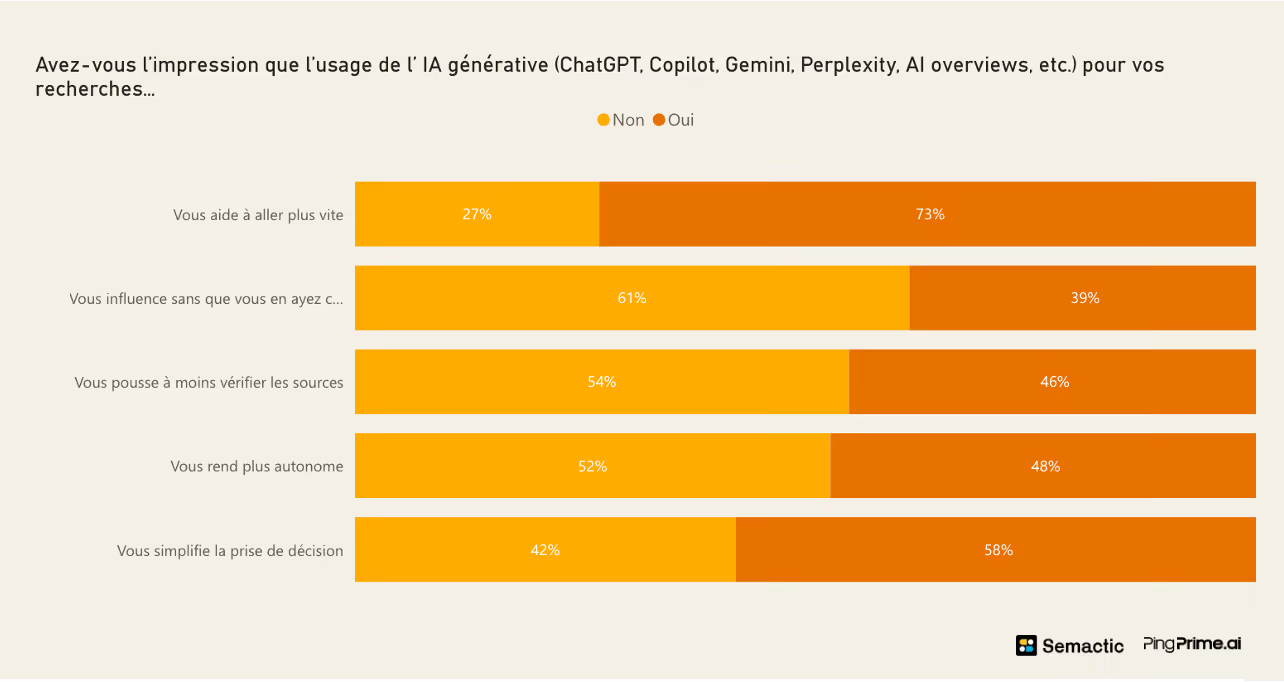
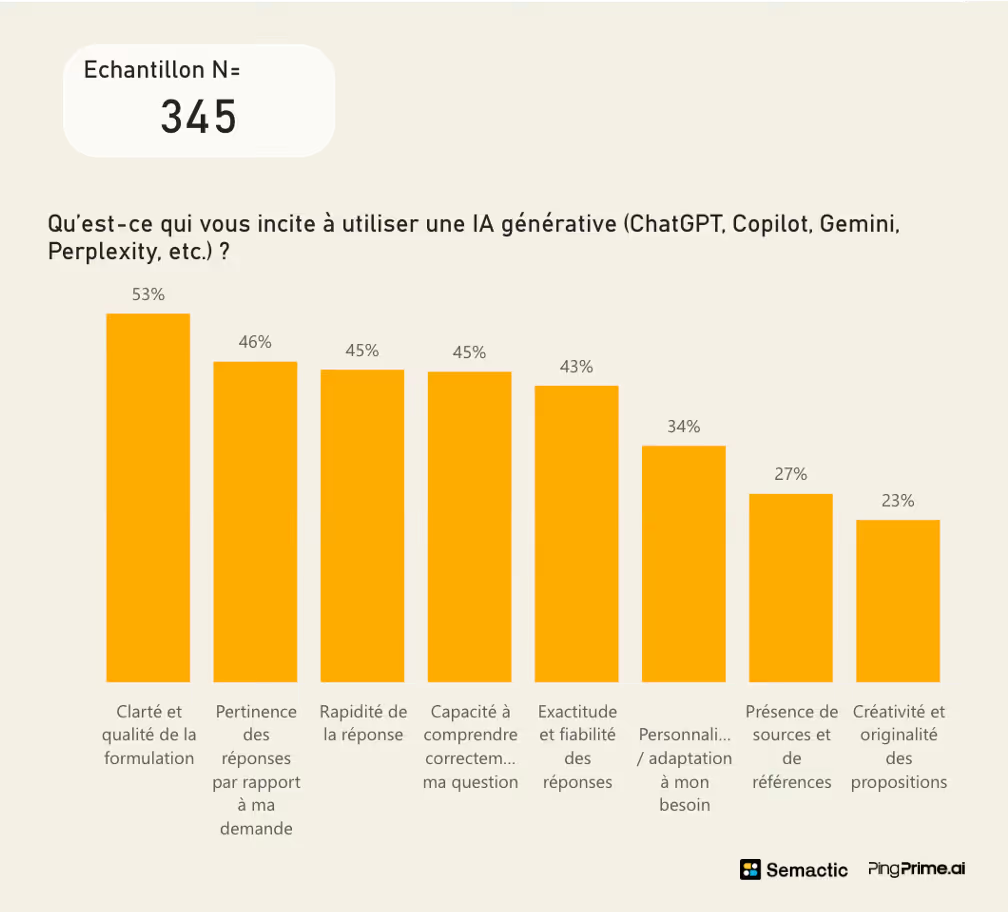
What drives AI usage is not raw accuracy, but smoothness.
Users value clarity first (53%), followed by relevance (46%) and speed (45%), while factual accuracy ranks only fifth (43%).
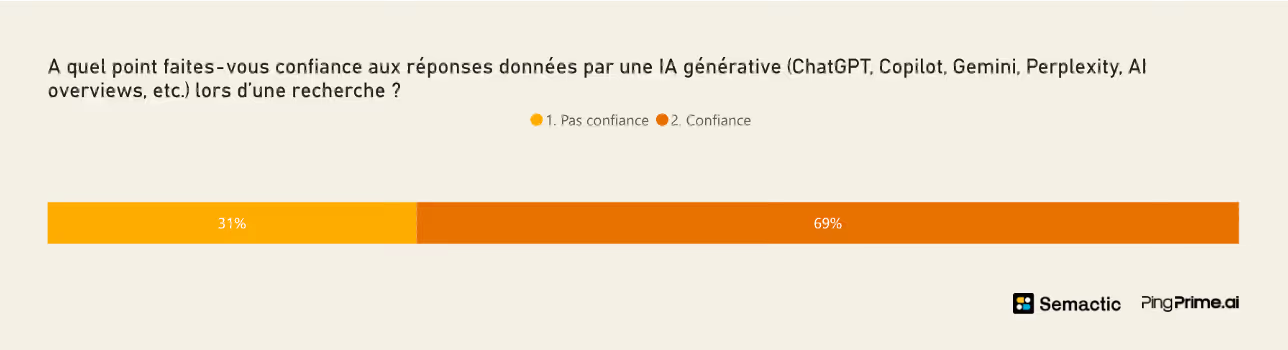
And although 69% of respondents say they trust AI-generated answers — from moderate to high trust — this trust remains cautious: many admit they do not always check the origin or quality of the content provided.
Yet Belgian users want to stay in control: nearly two out of three still refuse to delegate an important decision to an AI.
““Belgians know AI isn’t infallible — and they use it anyway. It’s not naivety, it’s pragmatism.”
— Céline Naveau, co-founder of Semactic.
For most people, AI is primarily a tool for efficiency.
Saving time remains the main motivation, followed by clarity of answers and immediate relevance.
But efficiency comes with a downside: a significant proportion of users accept the responses as they are, without systematically checking sources.
Younger generations massively adopt synthetic formats — such as AI summaries integrated into results — but do not always question them.
“AI isn’t judged on truth, but on the fluidity of the experience.”
— Sabrina Bulteau, co-founder of PingPrime.ai
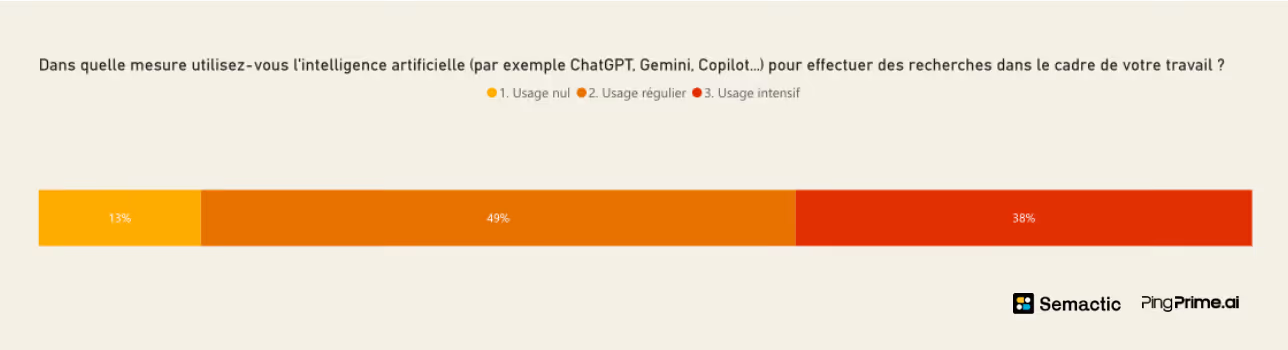
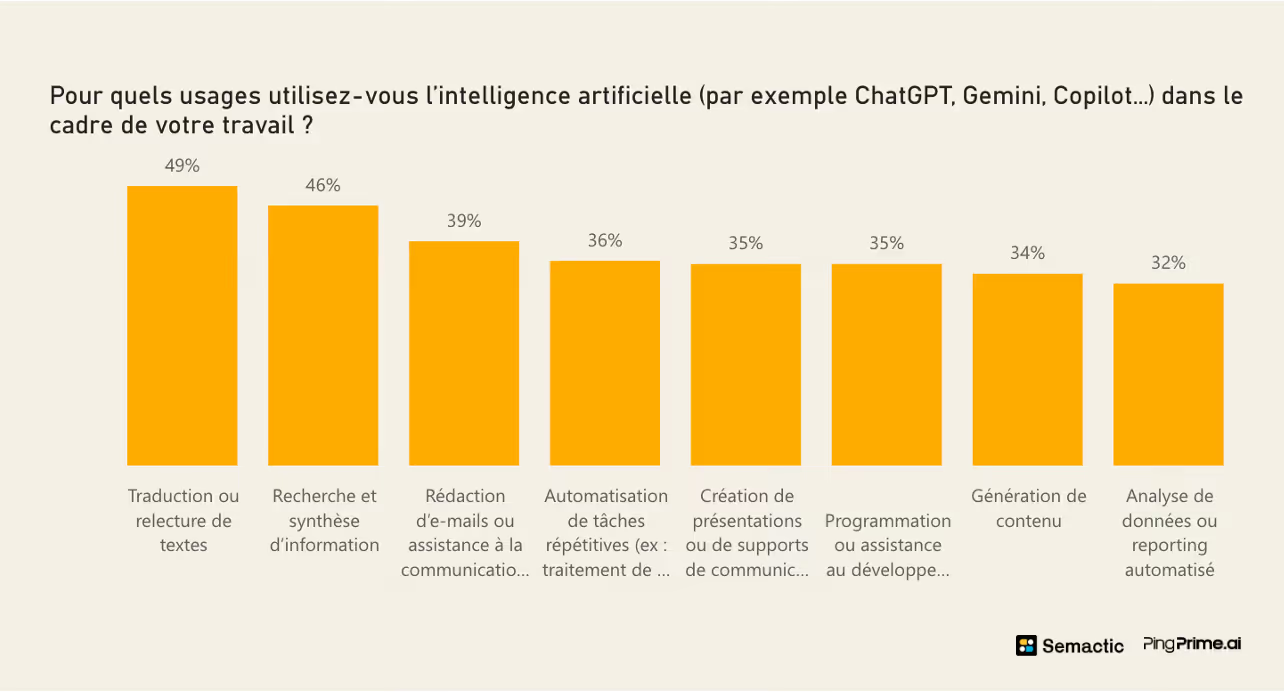
On the professional side, a large majority of Belgian workers say they use AI daily.
The most frequent uses: translation (49%), research and information synthesis (46%), writing (39%) and task automation (36%).
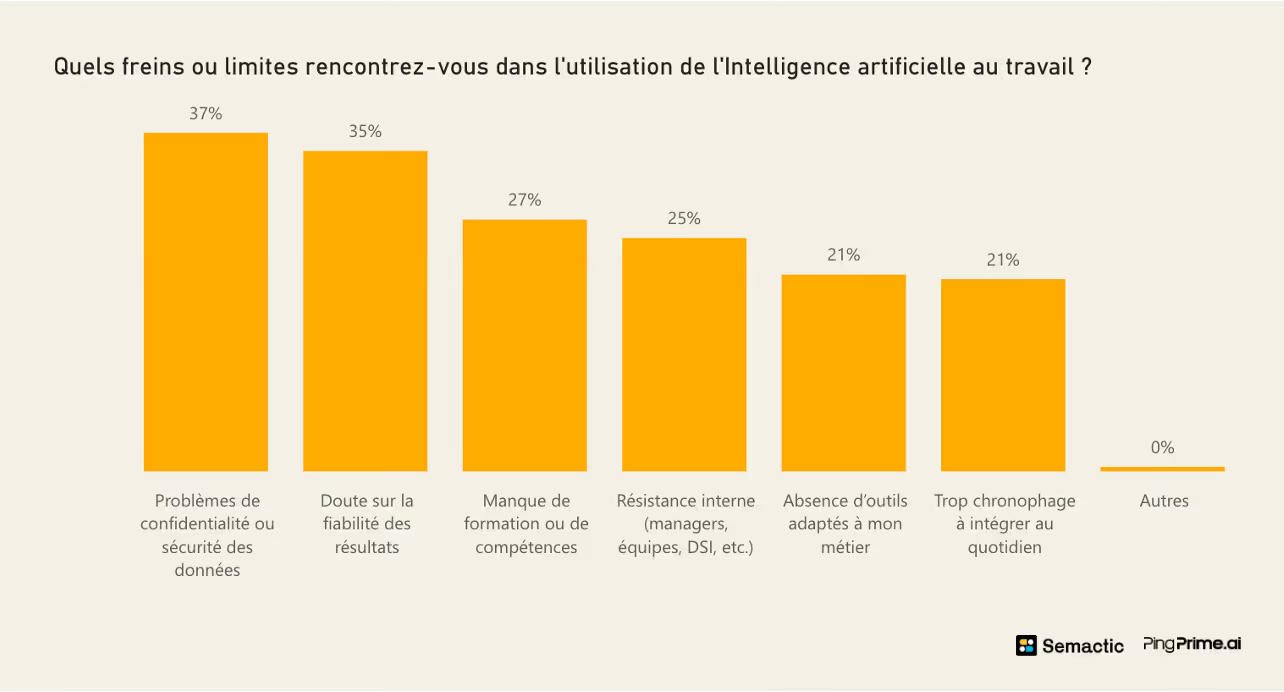
Yet obstacles remain: confidentiality (37%), reliability (35%) and lack of training (27%).
“The challenge is no longer adopting AI, but learning to use it with discernment and method.”
— Olivier de Decker, co-founder of PingPrime.ai
The study highlights a paradigm shift: people click less, but converse more.
Companies must now learn to be understood, cited and surfaced by artificial intelligences.
This is the core of Generative Experience Optimization (GEO) — optimising online presence to stand out inside AI-powered engines such as ChatGPT, Perplexity, and Google’s AI Mode.
“The battle is no longer fought only on Google’s first page, but inside AI-generated answers — whether they come from Google or ChatGPT.”
— Kevin Coppens, co-founder of Semactic
Belgians stand in a fascinating in-between:
Curiosity encourages AI use, but caution imposes vigilance.
The study shows a subtle balance between autonomy and critical distance.
AI makes choices easier (+ autonomy, + speed, + accessibility) but can reduce systematic verification.
“Trust is growing… but critical thinking must keep up.”
— Sabrina Bulteau, co-founder of PingPrime.ai
Generative AI has now entered our lives — in our searches, our decisions and our work.
It changes the pace of our thinking more than its essence.
“AI doesn’t replace human judgment — it accelerates it.”
— Céline Naveau, co-founder of Semactic
● 80% regularly use search engines
● A majority rely on social networks or video formats for information
● 67% use generative AI at least occasionally
● 61% notice AI-style summaries (AI Overviews)
● 36% have already made at least one purchase based on an AI recommendation
● 53% - #1 criterion: clarity
● 45% - speed and understanding
● 43% - factual accuracy (5th criterion)
Conducted in 2025 by IntoTheMinds for Semactic and PingPrime.ai, the study is based on a dual representative sample:
● 1,002 Belgian respondents aged 18 to 65, surveyed online using quota sampling (gender, age, region, education).
● 312 professionals from companies of all sizes (micro, SMEs, large enterprises), active in marketing, communication, sales, training and management.
Margins of error: ±3% for the general public, ±5% for the professional sample.
.avif)



.svg)