EN

Being a market leader does not guarantee a presence in AI responses. This first brand visibility index for ChatGPT and AI Mode, conducted by Semactic in collaboration with Trends-Tendances, reveals that some market-leading brands are almost absent from the responses generated by ChatGPT and Google AI Mode, while challengers are making their mark. Adidas ranks 8th in sports. Intermarché ranks 8th in general food. What these gaps reveal is less a matter of budget or brand awareness - and more a matter of content, structure, and the signals sent to AI models.
Despite a significant presence in the Belgian market, Intermarché remains largely invisible in the results generated by AI search engines. The reason is structural : its Belgian website is limited primarily to promotions, recipes, and store locator pages, with no editorial or thematic content.
The group does have a newsroom, but it focuses on France - Intermarché’s press releases are published on mousquetaires.com, not on intermarche.be. When an AI model searches for “the most sustainable supermarket in Belgium,” the Belgian site has nothing to offer.
Conversely, Colruyt and Delhaize regularly feed their newsrooms and specialized retail media, which are now a major source for AI models. Albert Heijn, even though its Belgian presence is more recent, benefits from a rich digital content ecosystem originating from the Netherlands and Flanders. Bio-Planet, a subsidiary of the Colruyt Group, indirectly benefits from the group’s editorial machinery.
Intermarché’s Belgian website functions more as a directory of stores and flyers than as a content platform. Semantic markup is underdeveloped, there is no clearly structured sitemap, and most of the group’s SEO power resides on the .fr domain—which obscures the “Intermarché Belgium” signal for models operating in the Belgian context.
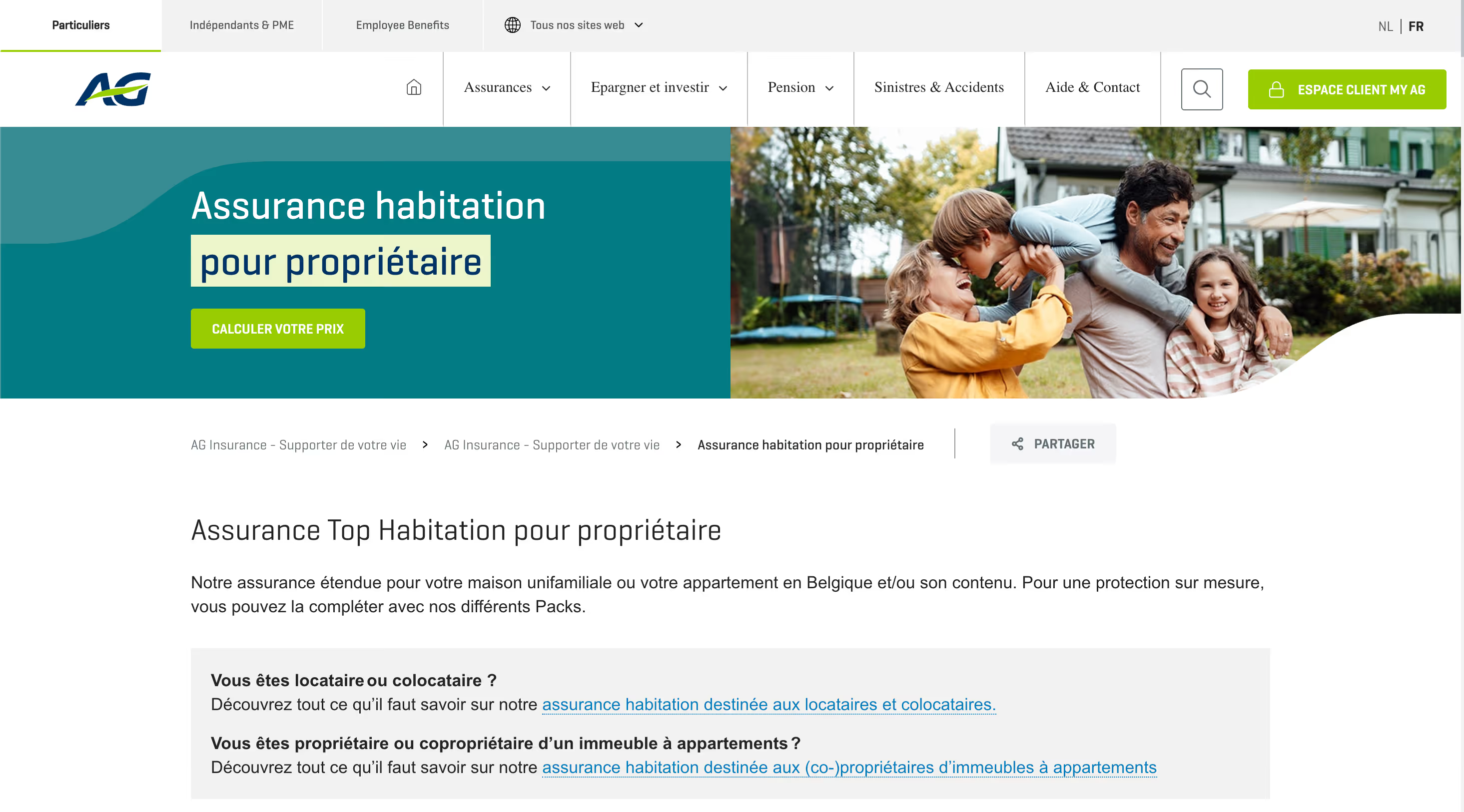
When an AI model queries ag.be, it finds a structured and consistent site map : every product, every use case, and every piece of advice has its own indexable HTML page, with a semantic URL that precisely describes its content. The page dedicated to family accident insurance is cited about fifteen times across the two sets of 50 questions tested - it’s a hub page that answers dozens of different queries.
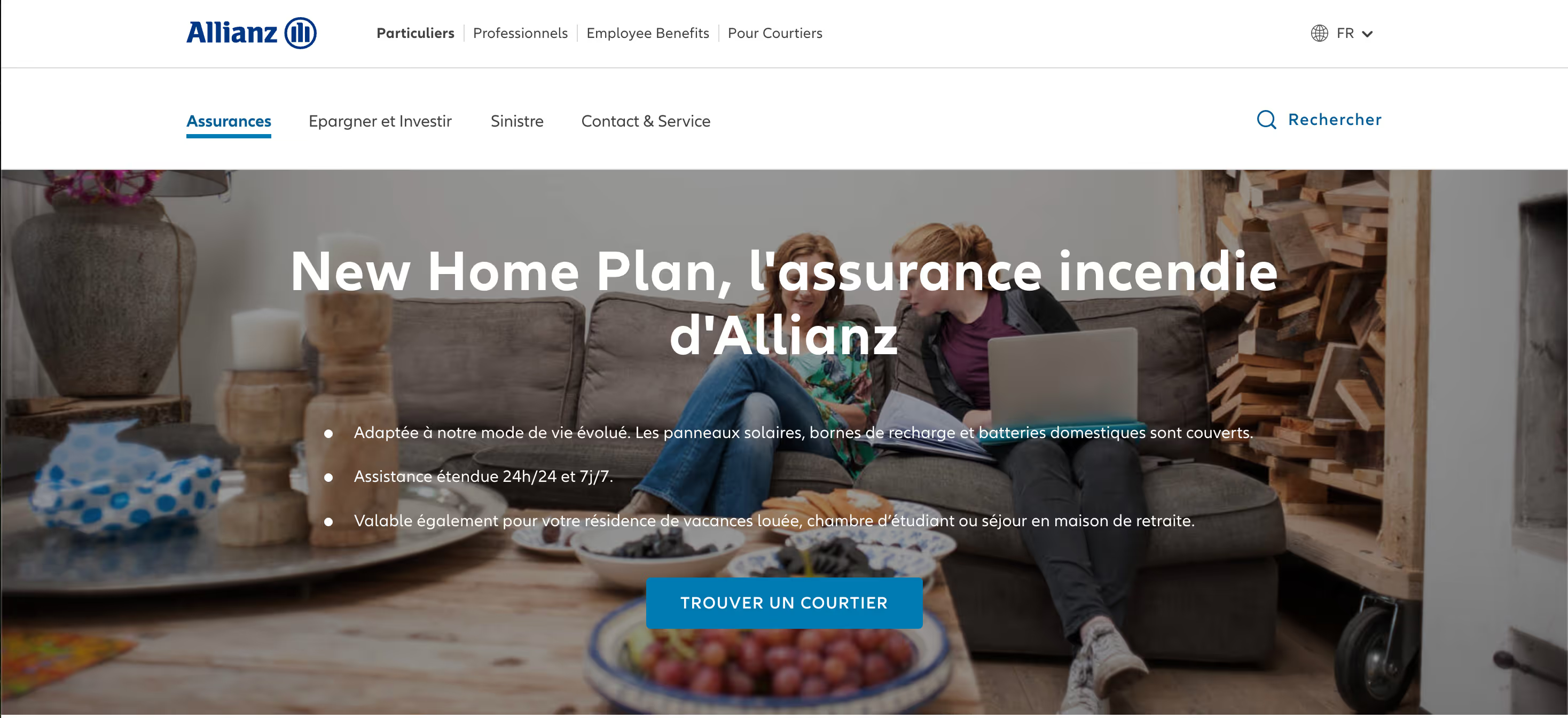
Allianz Belgium has made a clear business decision : to sell exclusively through professional, independent insurance brokers. This model has a direct impact on their website. No advice articles, no practical guides, no simulators. Every product page ends with the same invitation to contact a broker. The actual content is relegated to PDFs of terms and conditions and IPID sheets - formats that are opaque to an AI model and do not convey semantic authority in the GEO sense of the term.
Allianz’s international reputation also does not translate into a presence in Belgian digital conversations. On Reddit, Belgians looking for insurance mention Ethias, AG, or Yuzzu - rarely Allianz. Its Wikipedia page is that of the global group, not the Belgian entity. AG Insurance, on the other hand, has a dedicated Belgian Wikipedia page, cited as a source in numerous questions on ChatGPT.
This page grants AG encyclopedic status : in ChatGPT's view, it is a brand that has been sufficiently documented to be cited first.
In the sports sector, AI-generated responses rely primarily on independent editorial content : product reviews, comparisons, and buying guides. Official brands account for only a small portion of the sources, far outnumbered by specialized media outlets, blogs, and forums.
Reddit is the most striking example. User discussions there are heavily leveraged to answer very specific questions - choosing a running bra, shoe comfort, advice for beginners - to the point where runners’ testimonials can carry as much weight as professional reviews.
In this environment, Nike remains the go-to brand. Its ecosystem of running content—advice on pronation, shoe selection, training—directly fuels AI responses to technical questions.
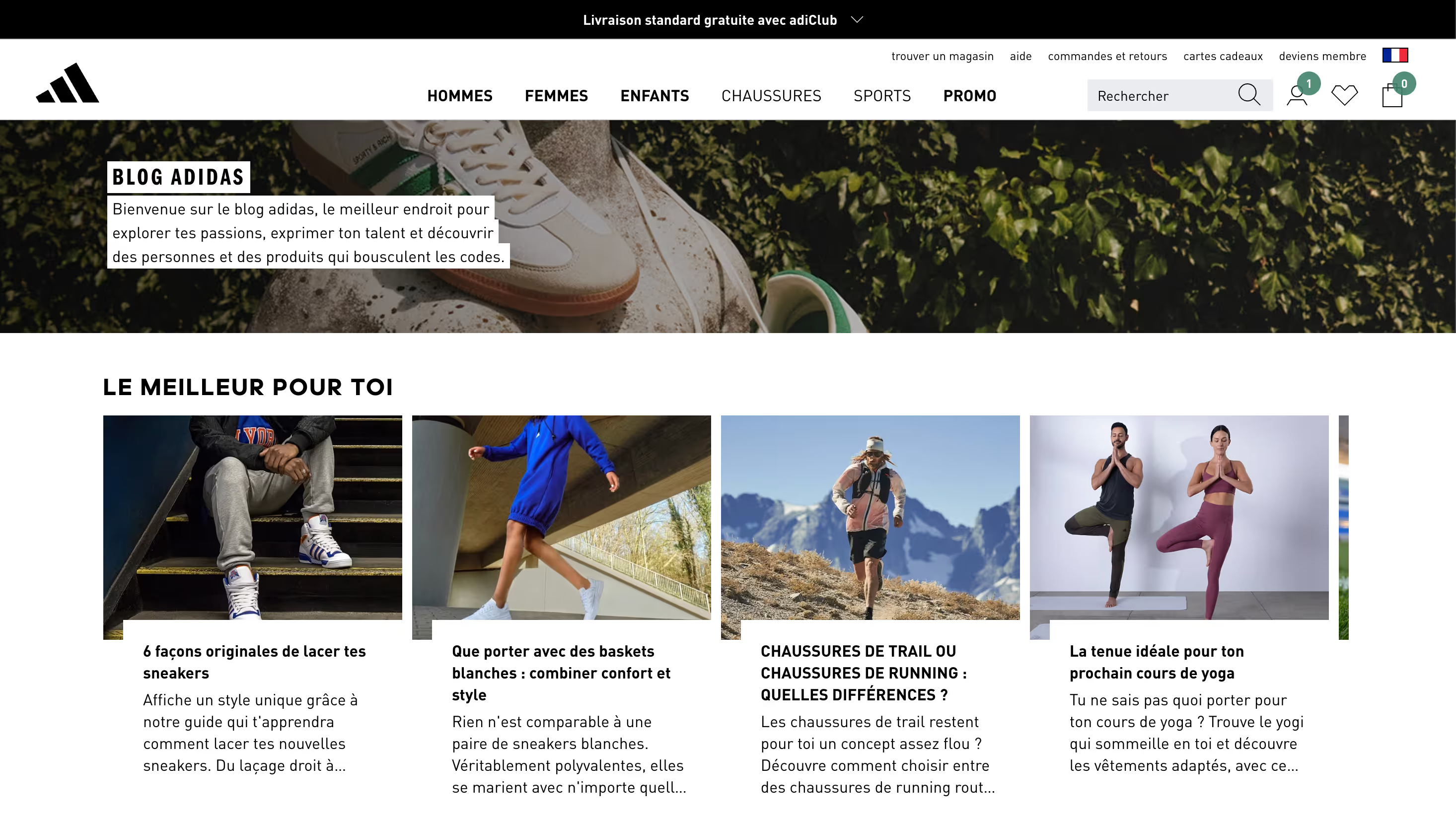
The surprise comes from the challengers. Adidas, the world’s second-largest sports brand by revenue, ranks only 8th in mentions, trailing notably behind Brooks, a running specialist far less known to the general public. This is one of the most striking discrepancies in this index, and the clearest illustration of the GEO principle as applied to the sports sector.
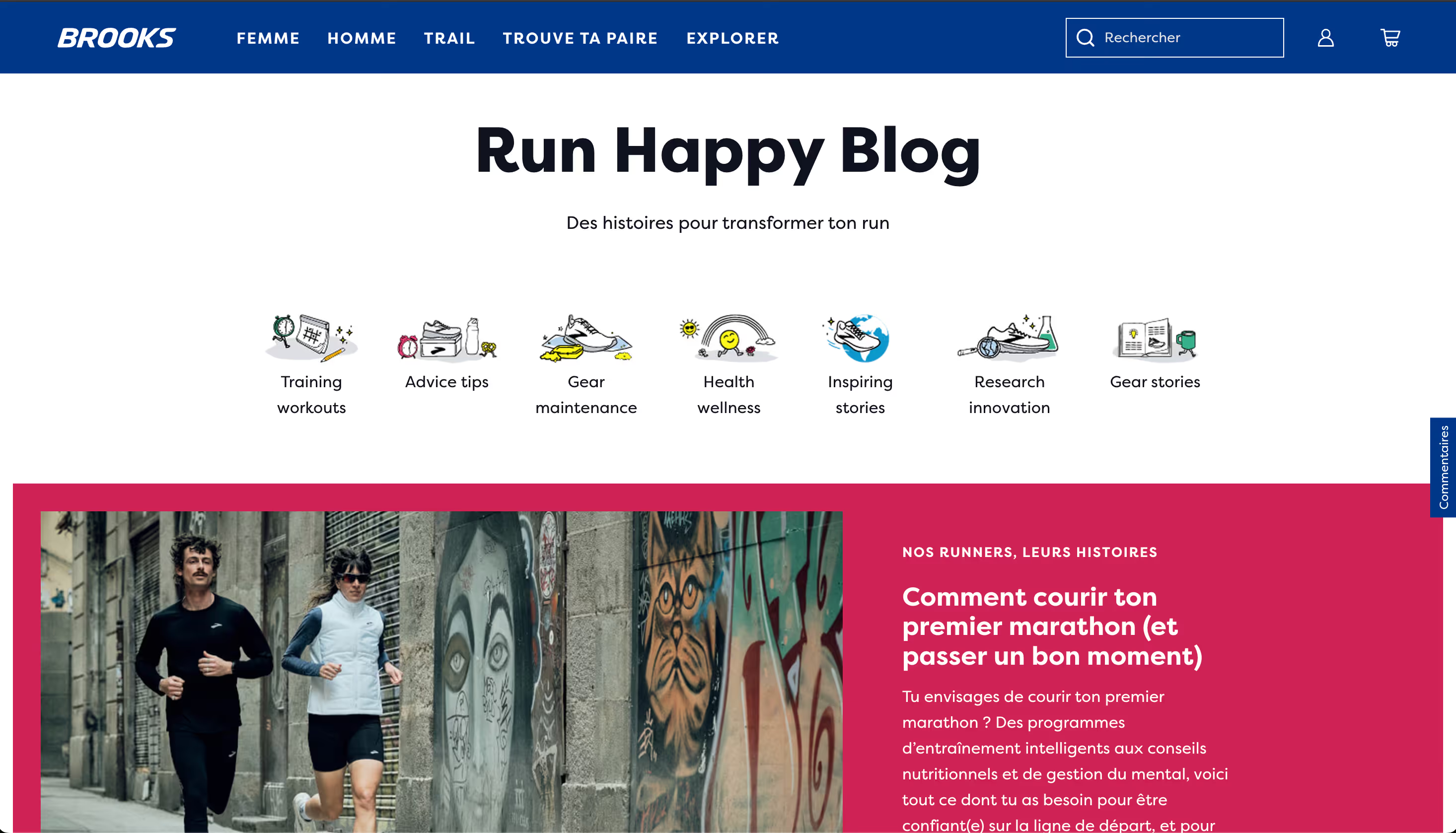
Brooks publishes a significant volume of practical content—training, injuries, nutrition, gear—designed to directly answer runners’ questions. Its visibility relies entirely on highly specialized third-party media outlets: Runninggearlab, Runner’s World, RunRepeat, Solereview, and iRunFar. These are leading publications in the running world, whose editorial authority is very high in the eyes of AI. Brooks also benefits from a notable presence on Reddit, particularly in niche communities like r/RunningShoeGeeks and r/trailrunning, where experienced runners specifically recommend its shoes.
The difference in editorial philosophy between the two brands is revealing. The Brooks blog answers runners’ questions: “How to run on different surfaces,” “Heel pain after a run.” The Adidas blog, on the other hand, focuses on brand content: “Visualize your next goal,” “6 creative ways to lace your sneakers.” One speaks to a runner looking for an answer. The other speaks to a consumer.
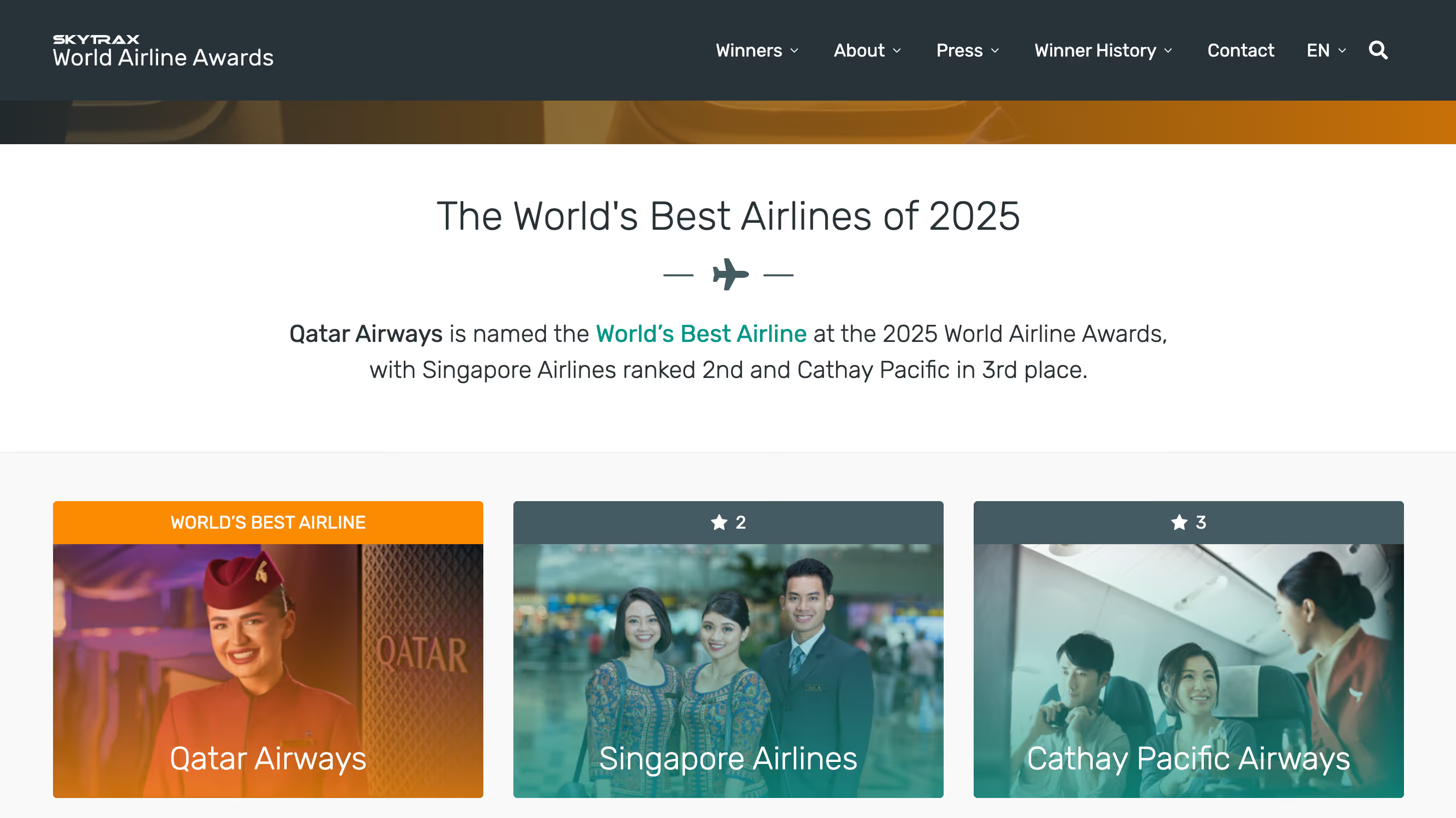
In the aviation sector, ranking websites are the most frequently consulted sources by AI models. Worldairlineawards.com is the top source in this sector-specific analysis.
It is in this context that Qatar Airways stands out at the top: the airline has won the title of “World's Best Airline” from Skytrax nine times - a record set over more than fifteen years, from 2011 to 2025. Added to this are regularly renewed accolades : Best Business Class, Best Business Class Lounge, Best Airline in the Middle East. This is not a one-off dominance ; it is a constant presence in the sources that AI models consider the most authoritative in the sector.
Qatar publishes its awards in the form of structured press releases on its own domain - pages read directly by the models. This combination of third-party authority and well-structured proprietary content is the dominant factor in its visibility.
In the chocolate industry, the two models do not draw from the same sources - and don't mention the same brands.
Google AI Mode functions as an industry credibility engine. The GaultMillau Chocolatier of the Year award plays exactly the same role here as the Skytrax award does for Qatar Airways: it’s not mainstream recognition that counts, but recognition from sources that Google considers expert. A GaultMillau-awarded artisan can thus outrank an unrecognized international brand. The website belgiumchocolatiers.com, which lists Belgian chocolatiers with a dedicated page for each artisan, is consulted as a reference directory.
ChatGPT works the opposite way, drawing from its training data. Its two main sources for chocolate are Wikipedia and Reddit. Wikipedia mentions Neuhaus, Leonidas, Côte d’Or, and Pierre Marcolini—the historic brands with established encyclopedia entries. Artisans like Benoît Nihant or Jérôme Grimonpon don’t have Wikipedia pages: ChatGPT doesn’t know them. Reddit is even more revealing: the threads cited are discussions by Belgians on r/belgium and r/brussels around questions like “which Belgian chocolate would you take as a gift?” - conversations that overwhelmingly mention brands known to the general public, not award-winning artisans.
.jpg)



.svg)