In a nutshell - In the GEO era, simply existing online is no longer enough: you need to exist as a recognised, distinct, and corroborated entity. Two Céline Naveaus in the same Belgian professional ecosystem, two Danny Goodwins confused by Google for a decade, one Michael King who solved the problem before the concept was even theorised - all these situations illustrate the same challenge. AI engines (ChatGPT, Perplexity, Google AI Overviews) don't reconcile blurry identities: they ignore them. Building and defending your named entity is no longer optional. It is the prerequisite for your visibility in AI-generated responses.
Until I was 24, I thought I was fairly unique. My surname - Naveau - felt rare, almost a signature, a heritage from my hometown of Chimay. Then it happened. In two acts.
Act 1. At a government employment agency, hired the same day as a colleague with the same surname. Different first name, thankfully. A classic office anecdote, nothing more.
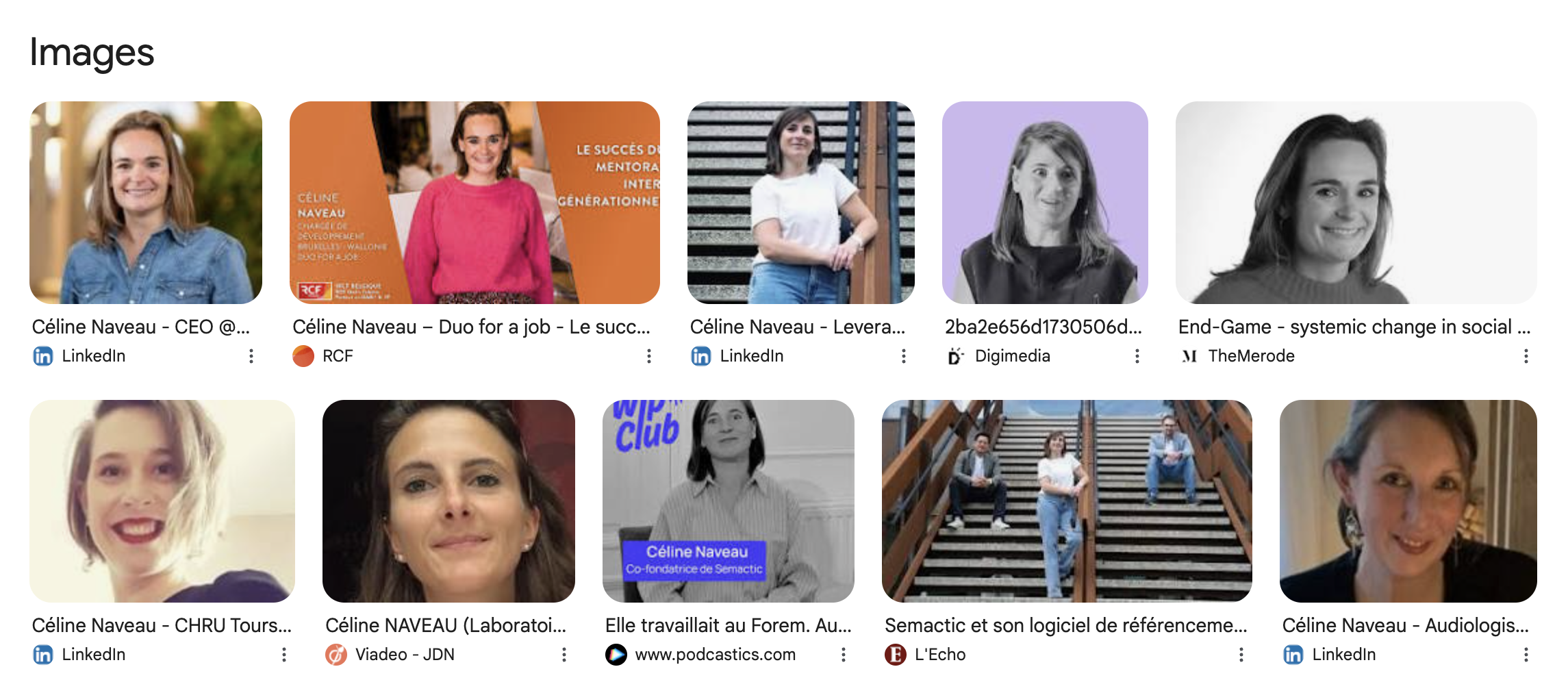
Act 2. A real namesake. Another Céline Naveau - a strong career, a presence in the same Belgian professional circles, and Belgium's 40 under 40 in common. I never quite knew whether I'd been selected by mistake. I decided to take it as a compliment. Well played, Céline. 😄
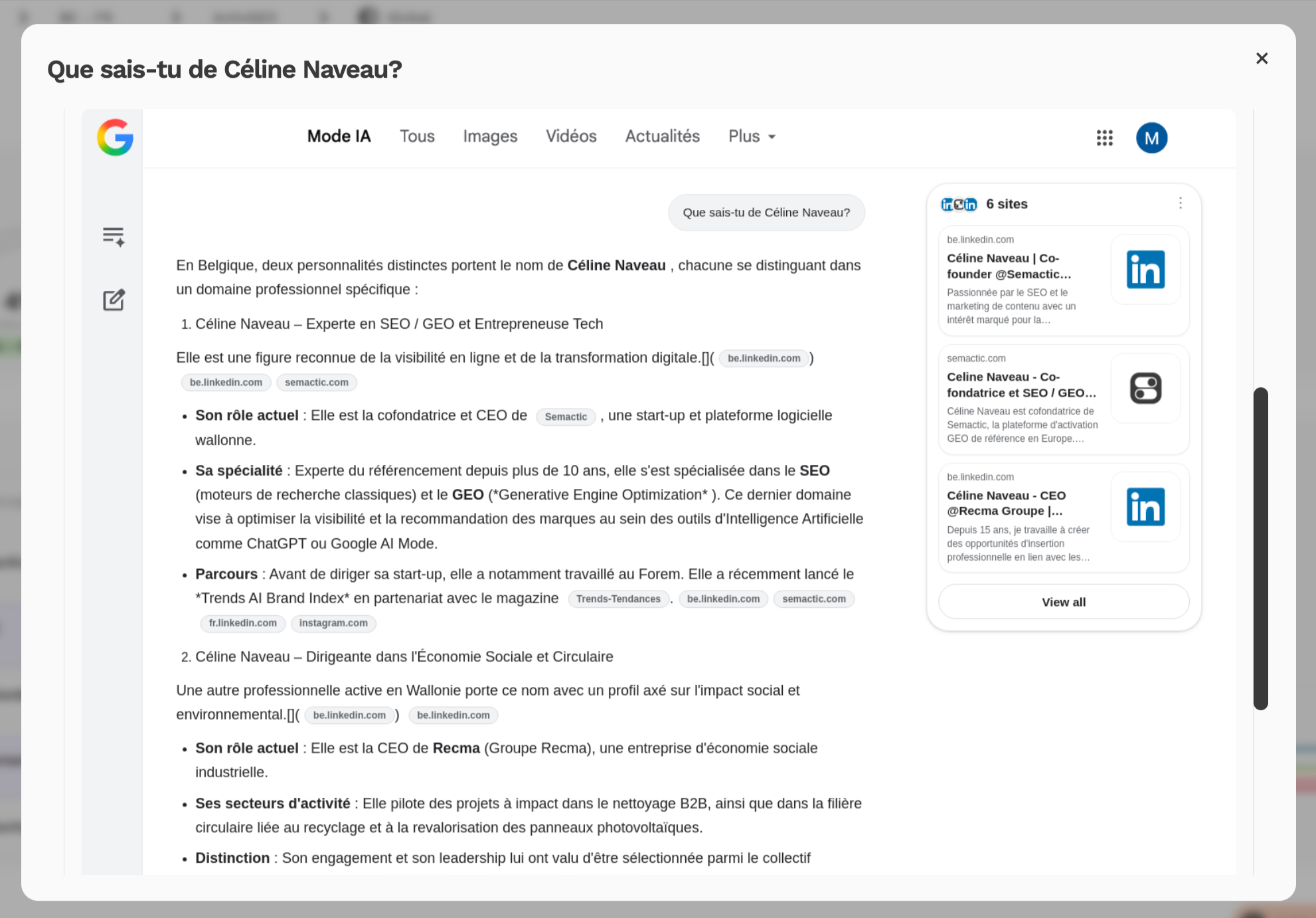
It could have ended there. But I've been working on the AI evolution of search since 2020. And in the world of GEO, a blurry identity is no longer a funny story. It's a structural risk.
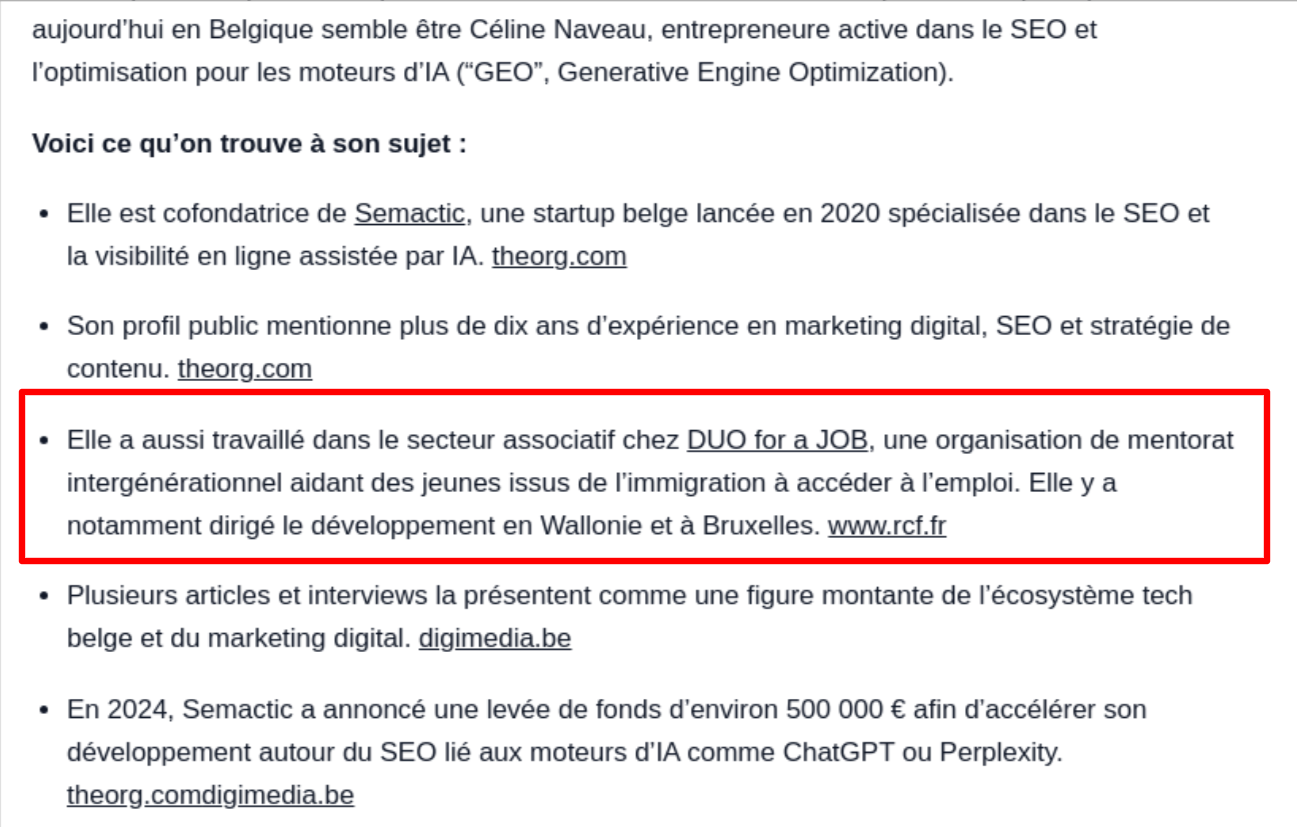
I'm not alone in this. And some situations are far more serious. Danny Goodwin, editorial director of Search Engine Land, shares his name with a Hall of Fame baseball player. The result? For over a decade, Google's Knowledge Graph treated both men as one and the same person.
The situation was severe: no standalone presence in the Knowledge Graph, no Knowledge Panel, and articles attributed to the baseball player.
"Google was absolutely convinced that Danny Goodwin the baseball player was the same person as Danny Goodwin of Search Engine Land. To a human, it's obviously absurd. But the Knowledge Graph algorithm relies on the weight of probability drawn from public information." - Jason Barnard, Kalicube
As revealed in the 2024 Google leak, the Knowledge Graph feeds itself with its own synthetic data, reinforcing existing assumptions with each update. When those assumptions are correct, the understanding becomes impressively strong. When they're wrong, the errors compound until they become exponentially difficult to unwind. An entity confusion in the Knowledge Graph isn't just a display problem - it severs the isAuthor signal and redirects all brand equity to the wrong entity.
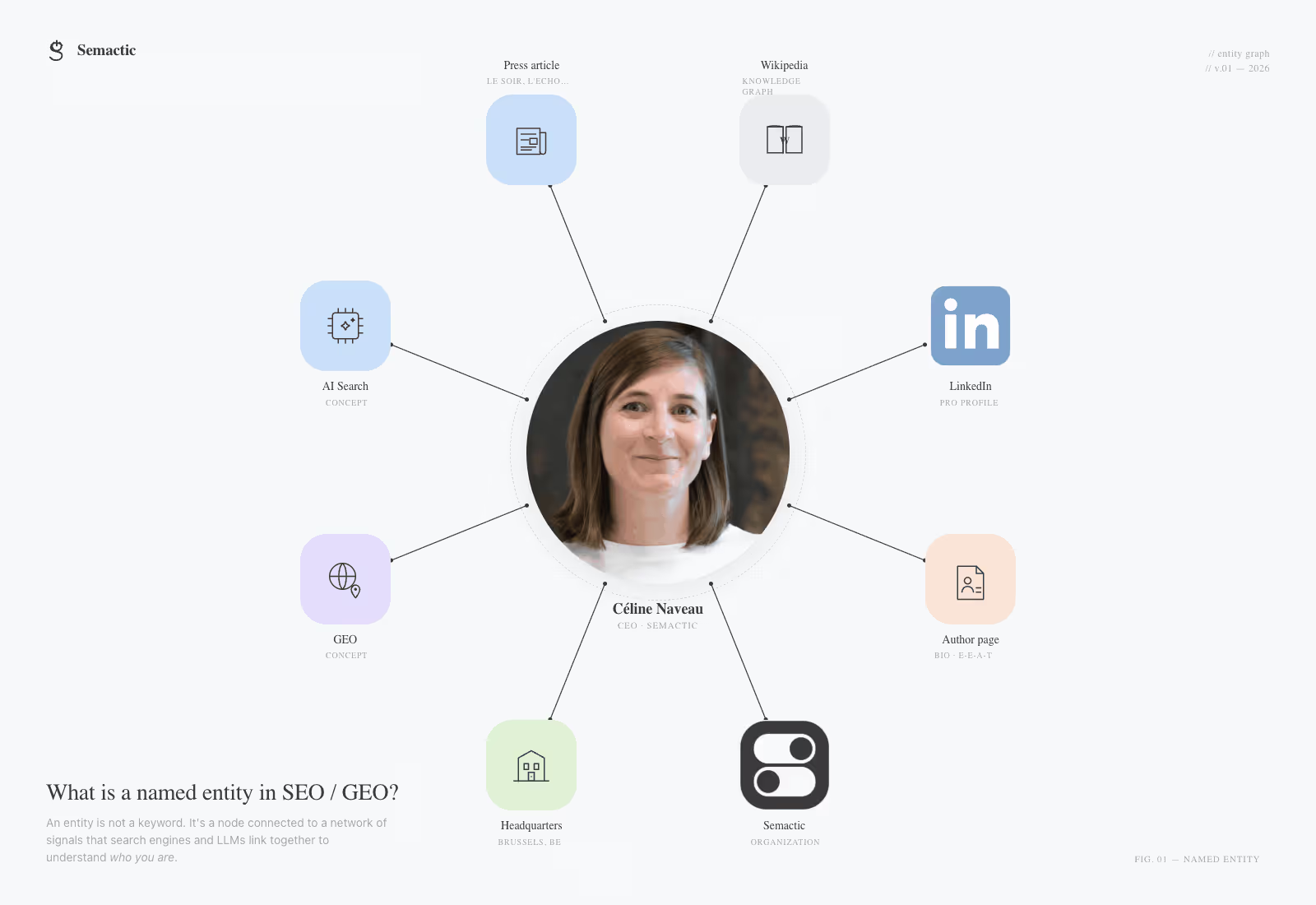
In natural language processing and semantic SEO, a named entity refers to a real-world object - a person, organisation, place, or concept - that information systems can identify, index, and connect to other entities unambiguously. Google builds a representation of the world through its Knowledge Graph, where each entity receives a unique identifier: the KGMID. Think of it as your social security number on the internet. Without it, you may exist in search results - but you don't exist as a recognised entity.
For a named entity to be properly recognised and disambiguated, three conditions must be met: distinction (your attributes must clearly differentiate you from any other entity with the same name), consistency (those attributes must be expressed identically across all your digital surfaces), and corroboration (independent third-party sources must confirm those attributes - you cannot self-declare).
Michael King, founder of iPullRank, carries one of the most common names in the world. Named "Search Marketer of the Year" in 2020, he could have built his entire digital presence around "Michael King". He chose the opposite: from the start, he created iPullRank as his personal brand - a unique name, impossible to confuse with anyone else. Search for "Michael King": you'll find actors, politicians, athletes. Search for "iPullRank": you'll find him, and only him.
The lesson isn't "create a pseudonym". It's: understand how information systems represent you, and take control of that representation.
In traditional SEO, entity confusion costs you rankings. In GEO, it can cost you your presence altogether in AI engine responses. LLMs - ChatGPT, Perplexity, Google AI Overviews - don't return a list of links. They synthesise a response from what they internalised during training and the trust signals available at the moment of generation. Their logic is one of documented trust: what is clear, consistent, and corroborated enters the response. The rest is noise.
Danny Goodwin's experience gives us a concrete roadmap. Jason Barnard (Kalicube) resolved one of the most complex situations he had encountered in 13 years of entity optimisation.
Step 1 - Build an Entity Home. A canonical reference page - typically your "About" page or a personal mini-site - that centralises who you are, your expertise, your geography, and your professional associations. It includes explicit schema.org Person or Organization markup. In Goodwin's situation, even a simple two-page WordPress site was sufficient.

Step 2 - Write an unambiguous summary. On the Entity Home, include a biography that opens with a simple semantic triple: "[First Name Last Name] is [Title] at [Organisation]." One clear, anchored fact the algorithm can latch onto. Don't overcomplicate it.
Step 3 - Build a corroboration loop. Update your digital footprint consistently: social profiles, author pages, third-party sources (Crunchbase, The Org, press mentions). Every page should reflect the same attributes and link back to the Entity Home. It's this repeated, cross-referenced signal that gradually builds Google's confidence.
In Goodwin's situation, despite extreme complexity: 4 months to get a unique identifier in the Knowledge Graph, 6 months for Knowledge Panel cards, 9 months for a stable description, 12 months for accurate People also search for results. And when Google AI Mode launched, it immediately presented the two Danny Goodwins as distinct entities - proof that entity optimisation impacts AI engines, not just classic search.
schema.org Person or Organization markup.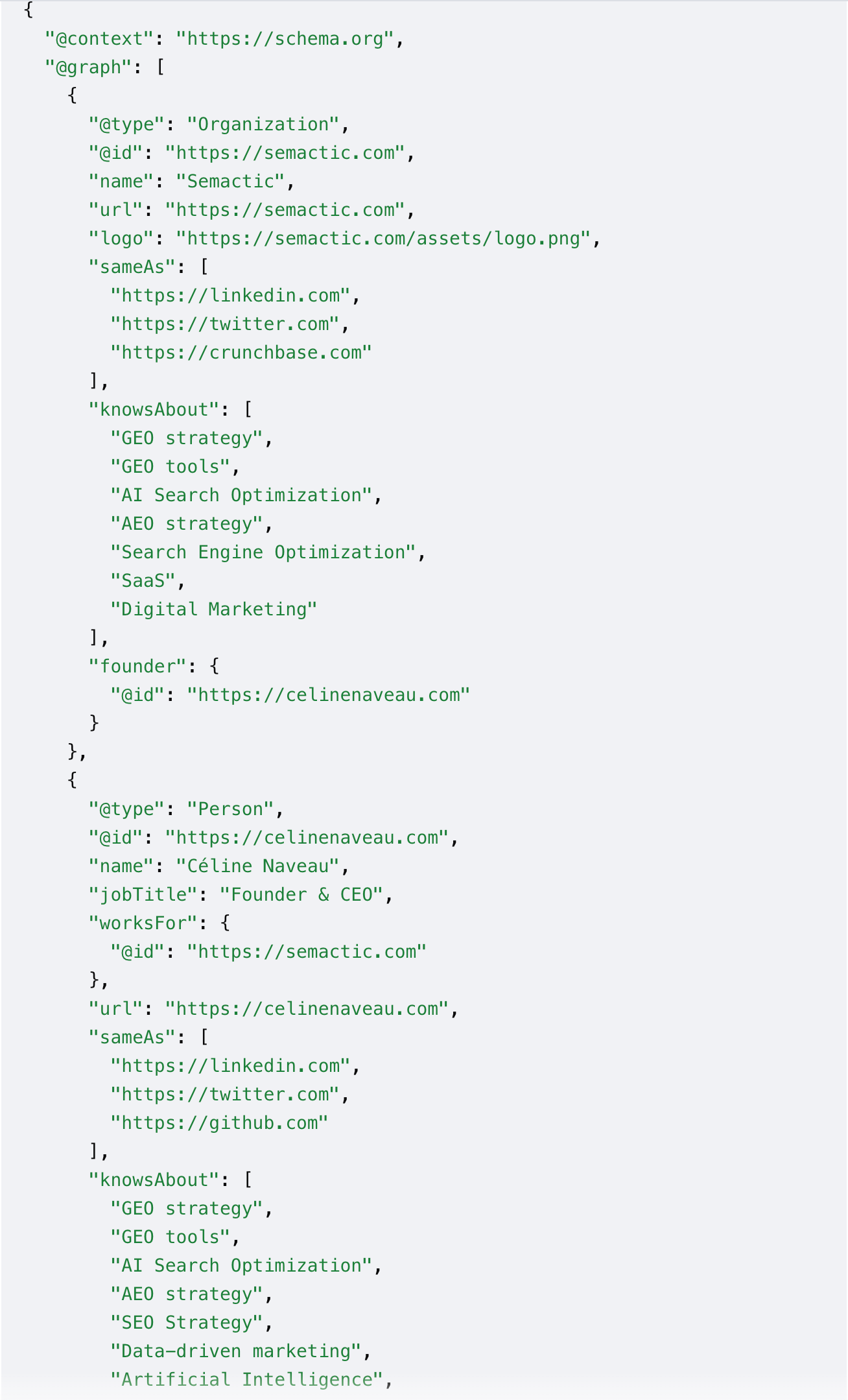
schema.org/Person markup with sameAs properties - your entity's digital signature, readable by all indexing engines and LLMs. Source: Semactic app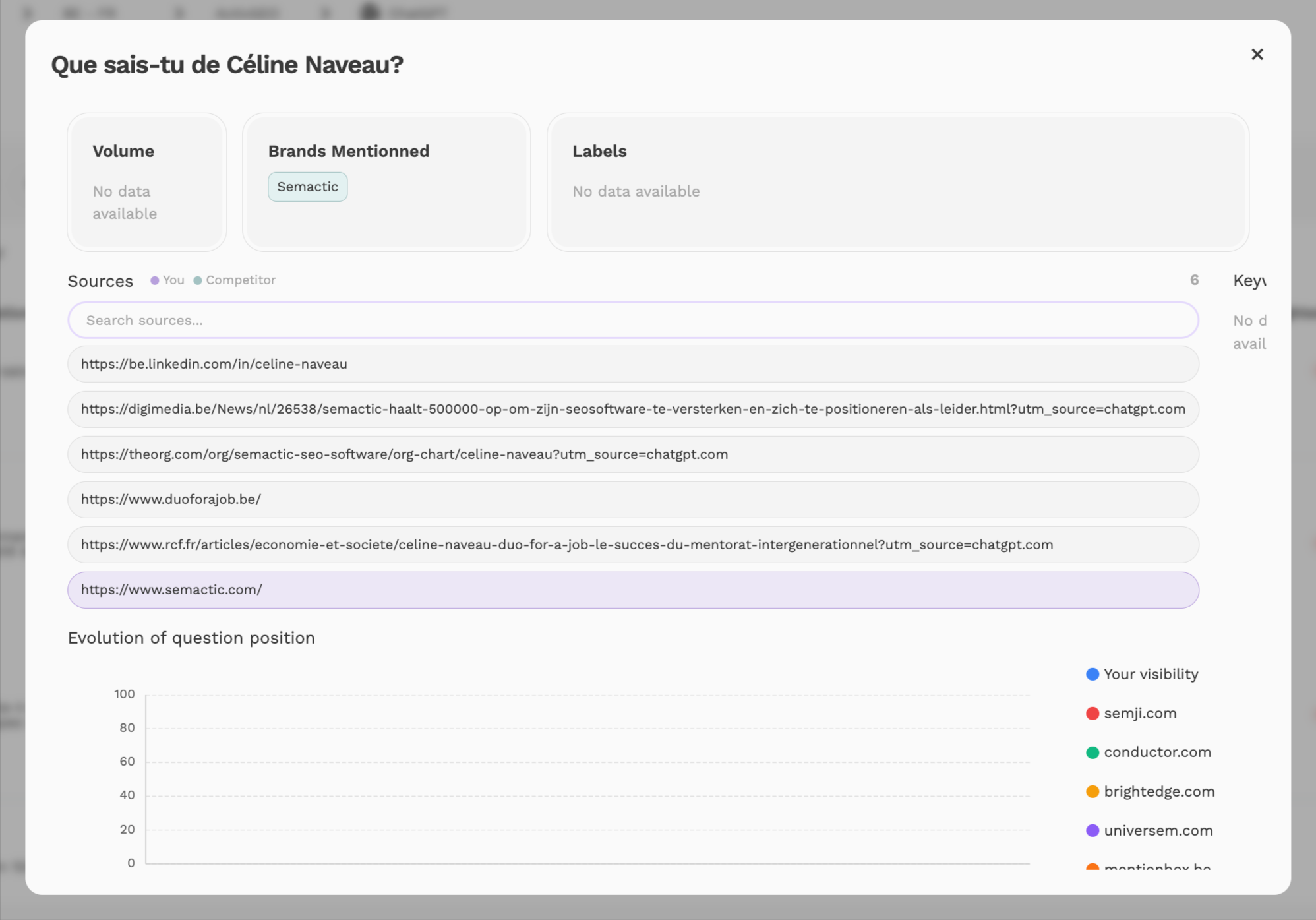
I co-organise the GEO Summit. I've been working on LLM visibility since 2024. I've been documenting the implications of language models on search since 2020. And my own named entity? It's a work in progress. 😅
Two Céline Naveaus in the same Belgian professional ecosystem, with overlapping signals on multiple fronts - that's exactly the scenario I'd flag to any client as a priority risk. Time to walk the talk. On the agenda: a structured Entity Home, full attribute consistency across all my digital surfaces, and dense enough context signals for Google - and ChatGPT - to know exactly which Céline Naveau they're dealing with.
The other Céline Naveau has nothing to worry about. 😄
In SEO as in GEO, it's not the best career that wins. It's the best-documented entity. Time to get to work.
.avif)



.svg)