EN
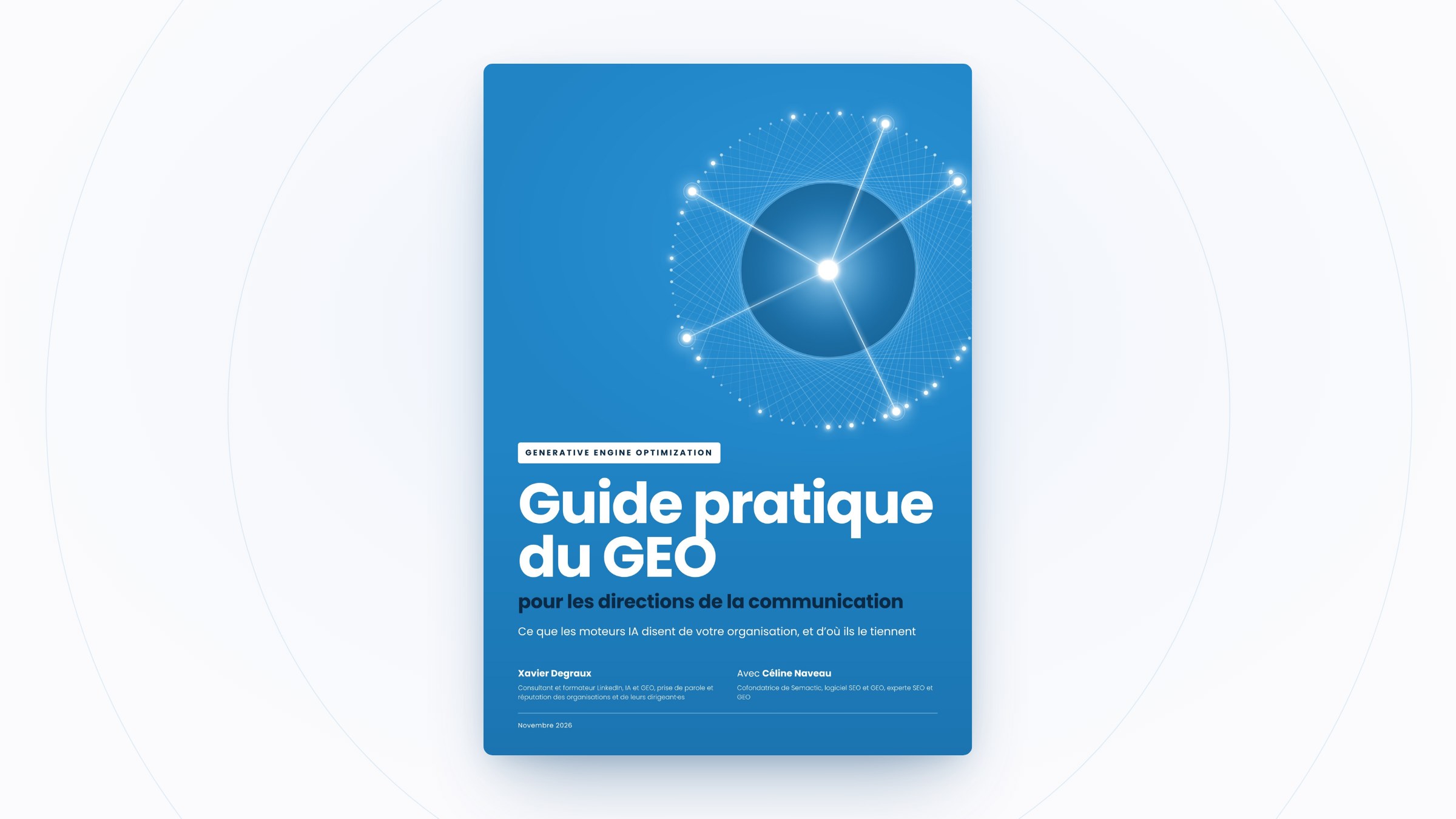
In short, the guide gives you:
For two years, GEO mostly came down to one question: do we show up in ChatGPT, in Google’s AI Overviews, in Perplexity? Teams wanted to monitor, and few asked how the measurement was produced.
The market is now entering a more demanding and healthier phase. Communication leaders ask where the data comes from, who produces it, on what sample and how reliable it is.
One example shows what is at stake: the route used to query the engine. A tool can capture the answer as it appears in the interface, as a user sees it, or query the model through its API. The API answer reflects the model’s raw output and does not always reproduce the web search, the displayed sources or the personalisation. The guide notes that vendors don’t all disclose their choice: Semrush, Profound and Semactic say they collect answers from real queries, while Conductor claims an “API-first” approach.
The same care applies to reading the numbers. In Belgian insurance, in French, Reddit’s share in ChatGPT answers is 6%, 17% or 100%, depending on the total it is measured against. All three figures are correct. Before you read a GEO figure, ask: out of what total?
Data sources keep multiplying. On top of the historical tools, Google Search Console and Google Analytics 4, come Bing Webmaster Tools and, above all, data specific to AI engines:
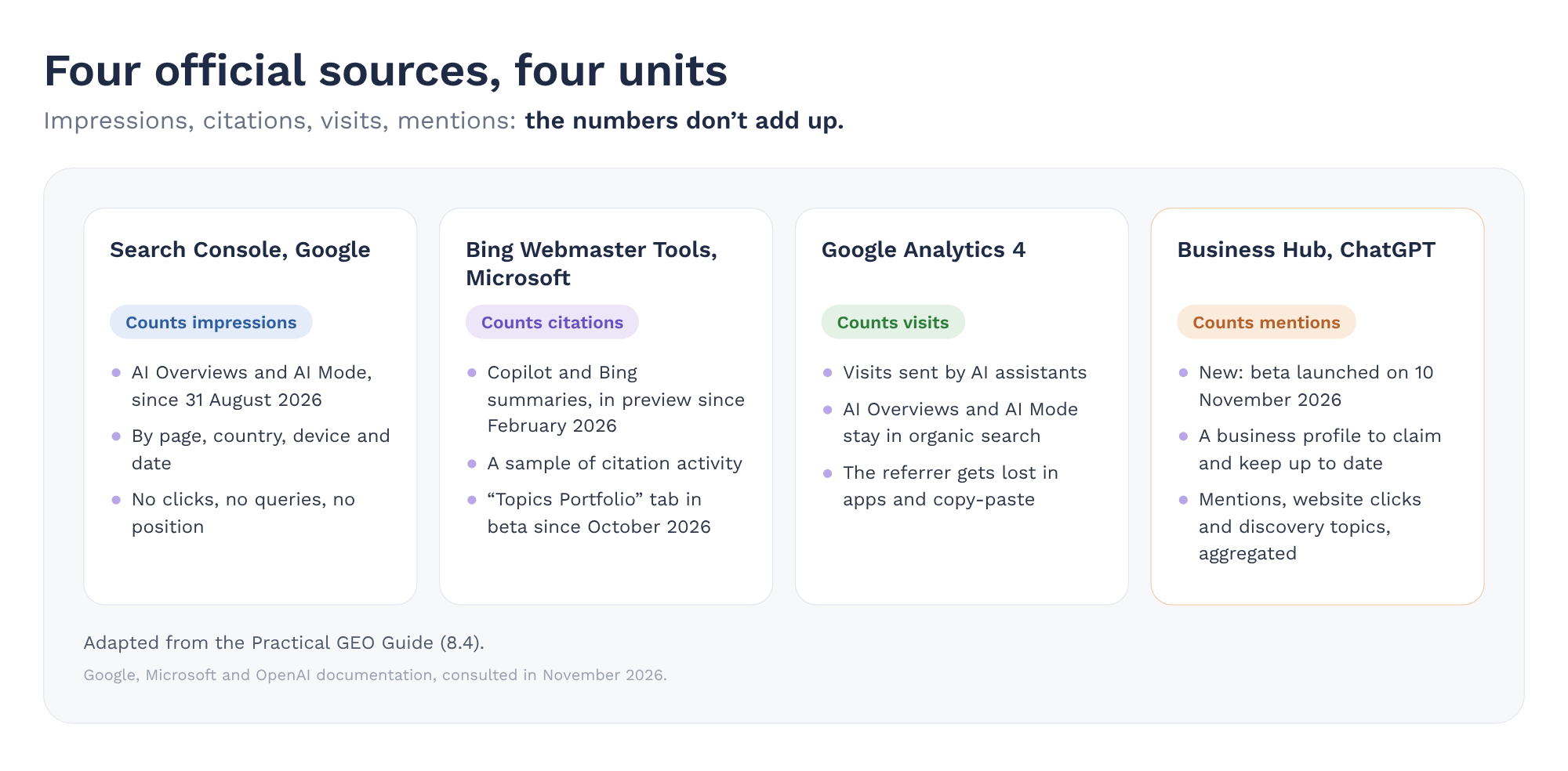
Impressions, citations, visits, mentions: these numbers don’t add up. The challenge is now to collect the right signals, interpret them and process them with method. That is the work Semactic does every day for its clients.
The guide takes stock of what we know, and of what we don’t know yet, to give communication leaders the keys to act. It follows the order of the work:
Every figure is dated and sourced, including when two sources contradict each other. Five appendices complete the guide: a consolidated audit grid, an action plan template, question sets by audience, a comparison of market checklists and a glossary.
Nobody has a perfect view of the subject today. Attribution remains blurry, data sources contradict each other, and significant economic interests are at play around this data.
Waiting is still a choice with consequences. Engines already answer your audiences with whatever they find. An organisation that doesn’t publish its own version of the facts leaves the floor to those who publish more, faster and louder, often US players. For brands and institutions alike, the question is who gets their voice heard in these answers.
The guide sets out a first GEO project that any communication team can run:
To go further, chapter 8 reviews 13 tracking tools on the same criteria, Semactic included: engines queried, frequency, volume, countries and languages, and the questions to ask any vendor before signing.
The guide was initiated and written by Xavier Degraux, LinkedIn, AI and GEO consultant and trainer. He helps organisations and their leaders with their public voice and reputation, and has worked with more than 500 organisations since 2013. A former business journalist (L’Echo, Trends), he lectures at the University of Liège.
Céline Naveau, co-founder and CEO of Semactic, provided the expert review and contributed data and illustrations, including from the Trends AI Brand Index. Every Semactic data point in the guide is labelled as such, with its method.
The guide is written in French.