We expected the merger of AI Mode and AI Overview. What we got was the merger of Search and Agentic — wrapped in a hyper-personalisation approach that Google had been quietly teasing for months. This is not an incremental update. It is a structural shift.
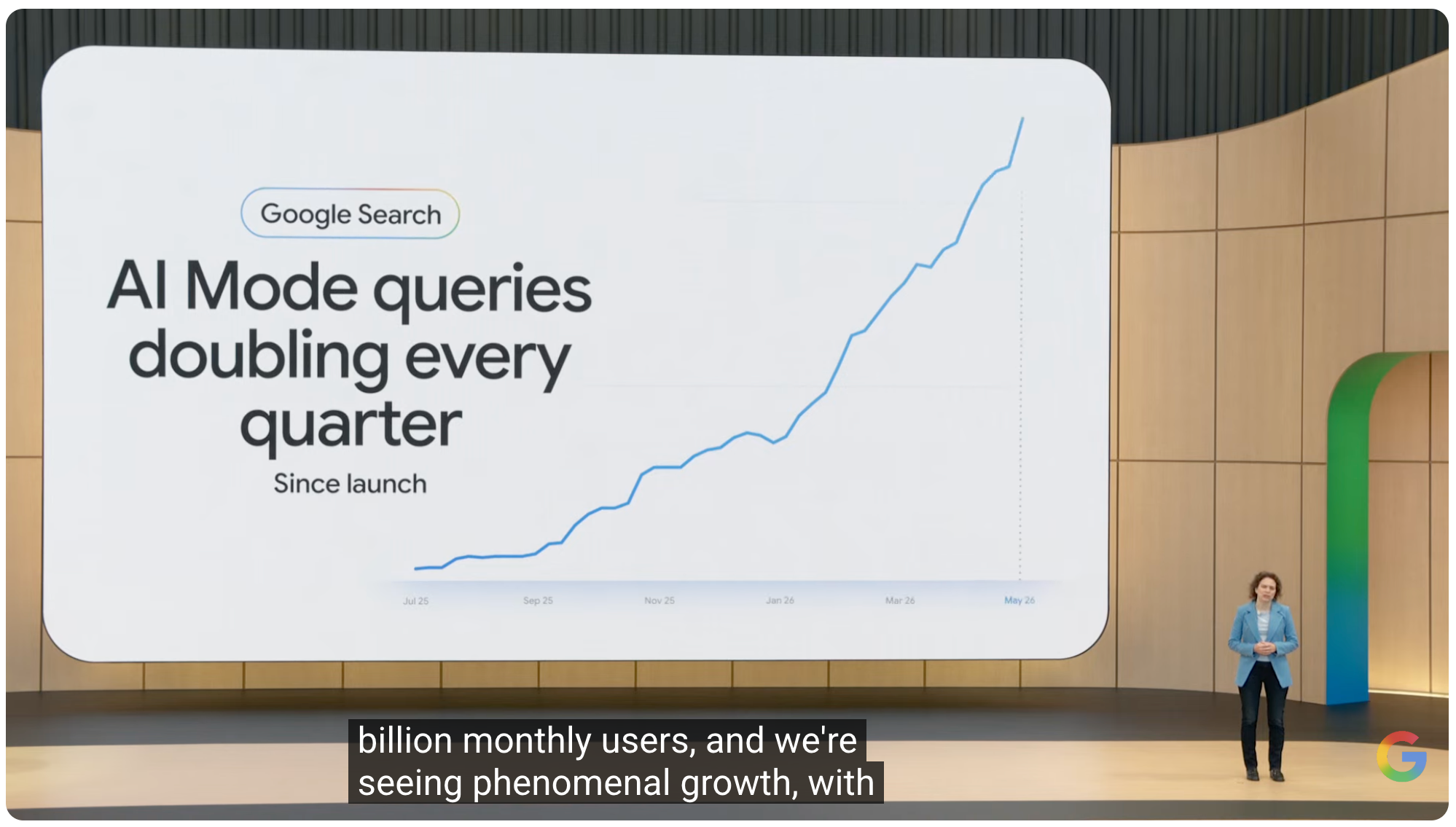
Google did not come to this keynote with promises. It came with metrics. AI Mode now exceeds 1 billion monthly active users. Queries have been doubling every quarter since the July 2025 launch. The curve shown on stage is not linear — it is exponential, with visible acceleration since January 2026.
Search now runs on Gemini 3.5, Google’s most advanced model, deployed across the entire global search infrastructure. For the critical SEO professional, this is the moment for honesty: you can no longer argue that AI Mode is marginal or in adoption phase. It is the dominant trajectory of Search.
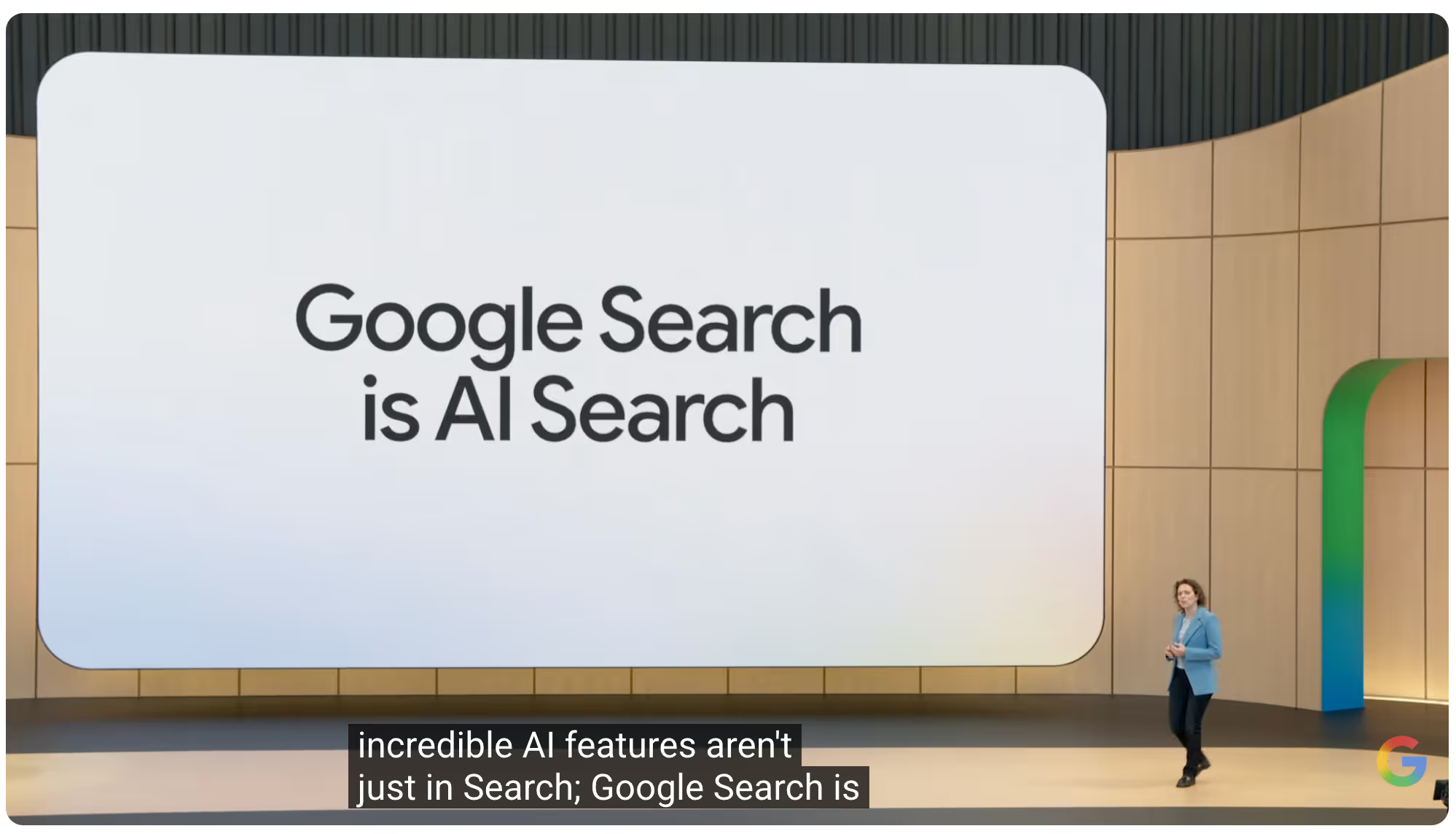
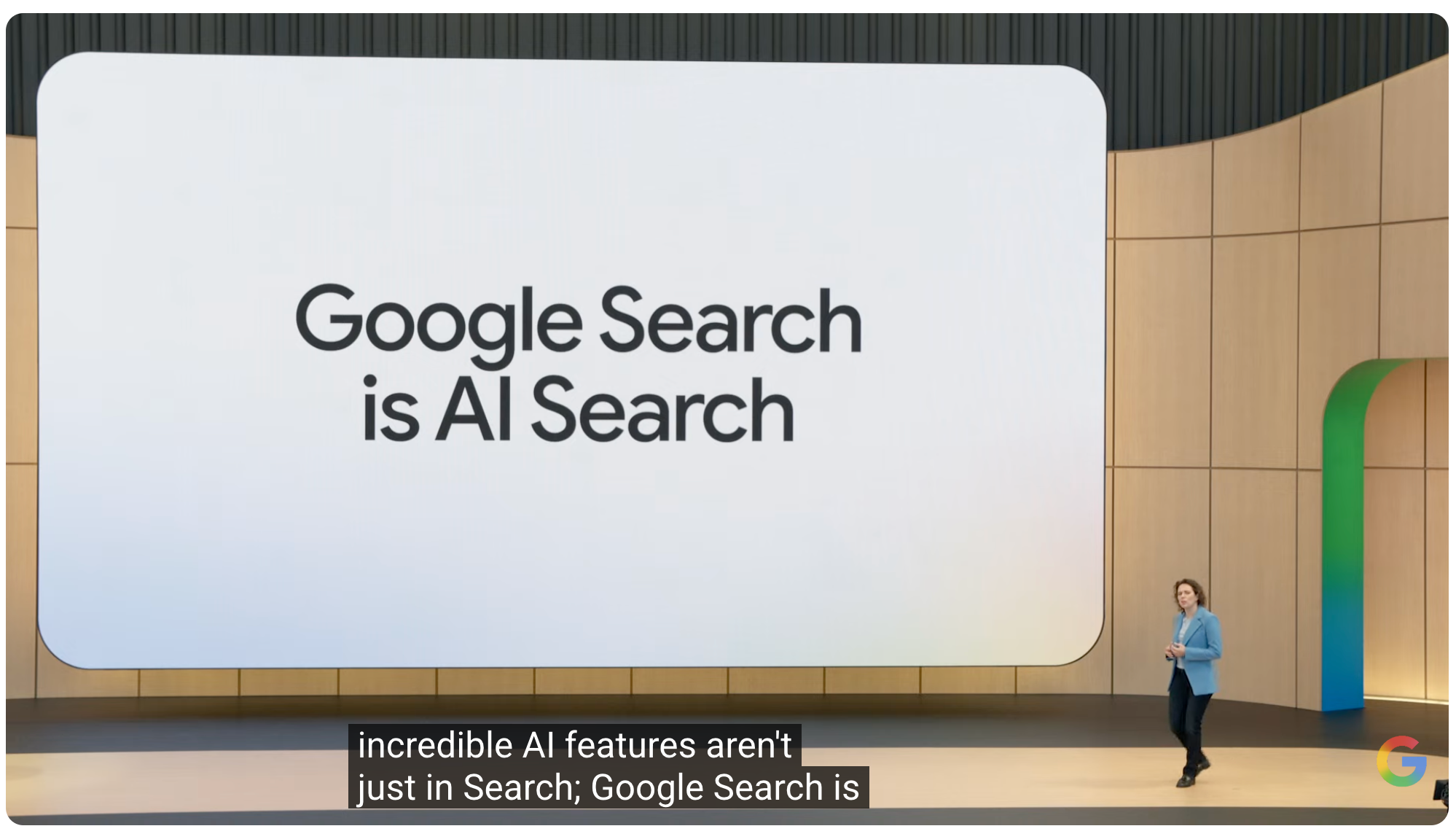
This is the most important slide of the keynote — not for what it announces technically, but for what it declares as identity. Google no longer says it is integrating AI into Search. It says Search is AI. The mental shift for SEO is fundamental: we are no longer working to position ourselves in an engine that indexes pages. We are working to be understood and selected by a system that reasons, synthesises, and acts.
The New intelligent Search box is live worldwide today. It is natively multimodal: text, images, and context can be combined in a single query. Google describes it as the biggest upgrade to the search box in 25 years.
.png)
.png)
The practical consequence is clear: queries will become longer, more complex, more contextual. A user can now upload two photos of a dress and ask to find something similar in a different colour scheme under a certain price. Optimising for short keywords is structurally obsolete. What matters now is being the best answer to a complete, contextual brief.
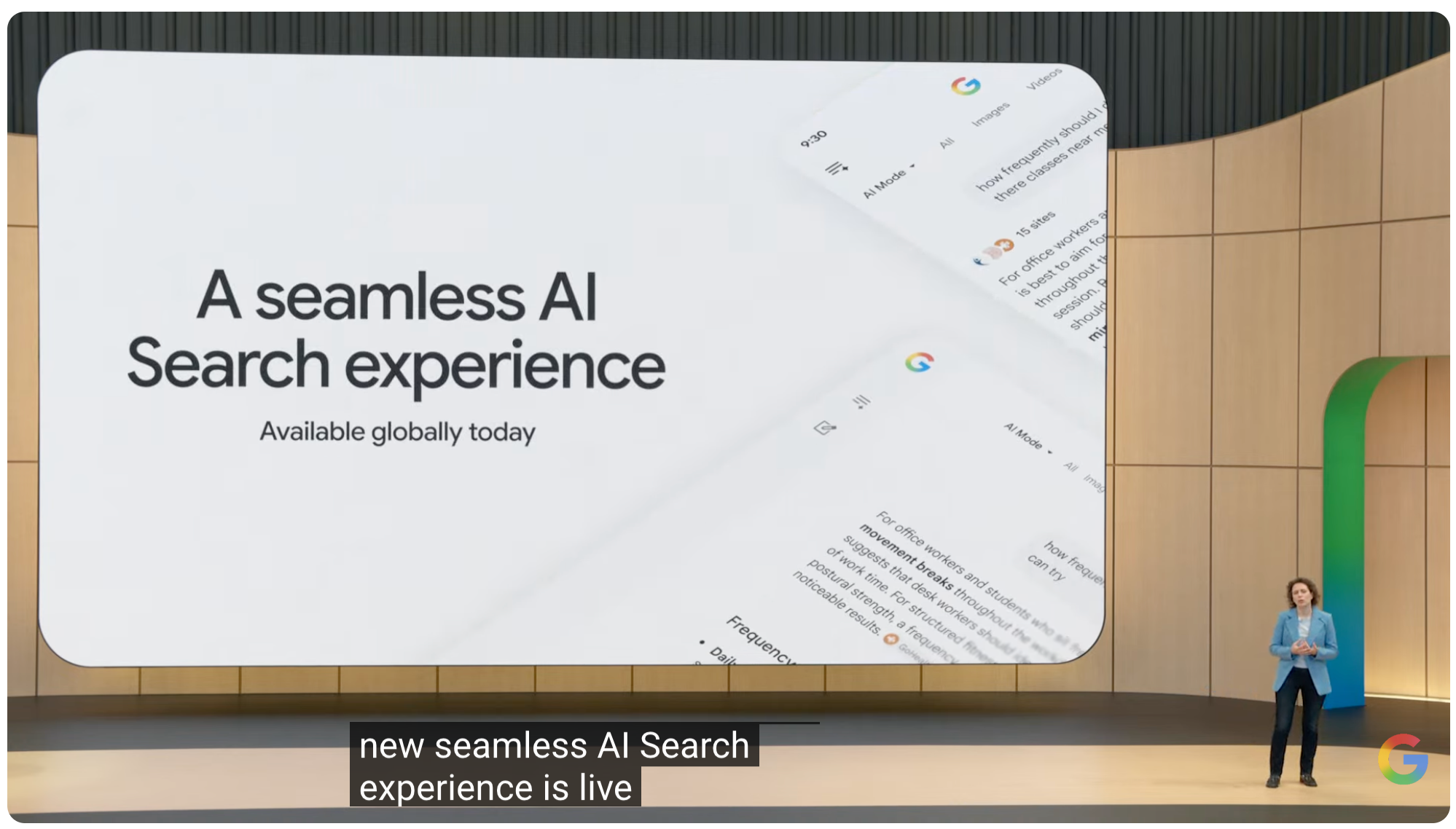
AI Overview and AI Mode are no longer two separate products with a bridge between them. They form a single conversational continuum, available globally today on desktop and mobile. Context persists throughout the session. Sources adapt dynamically as the user deepens the dialogue.
For SEO teams, this changes the unit of competition. You are no longer fighting for a single response to a single query. You are fighting to remain present and credible across an entire conversational thread — one you do not control and cannot fully predict.
This is probably the deepest structural change announced at this keynote, and also the least visually spectacular — which may be why it has been underreported.
Google no longer just answers queries. It monitors the web continuously on behalf of the user and notifies proactively when conditions are met. The example shown on stage is worth reading carefully: keep me updated on big biotech stocks with a P/E under 15, positive cash flow, and low debt, but only when their daily volume spikes at least 50% above their 30-day average.
That is not a search query. That is a standing instruction to an agent.
.png)
Information agents arrive this summer for Google AI Pro and Ultra subscribers. The one-off query gives way to permanent monitoring. Part of traditional search traffic will progressively disappear in favour of push flows managed by agents. The query is no longer an event — it becomes a persistent instruction.
.png)
This is the most underreported announcement of the keynote — and probably the most significant for publishers of functional content. Antigravity allows AI Mode to generate complete, interactive interfaces directly in Search: comparison tables, planners, fitness trackers, dashboards, data visualisations.

The phrase spoken on stage summarises it well: agentic coding at the scale of Search. Google is not sending users to a site that offers a comparison tool. It is building the tool itself, on demand, inside the search interface. Comparison engines, calculators, planning generators — entire categories of web content are directly exposed to this.
.png)
Personal Intelligence — teased in January 2026 for Pro and Ultra subscribers, expanded to free US users in March — is now deployed in 200 countries and 98 languages, with no subscription required. Gmail, Google Photos, and soon Calendar feed into the system.
The live demo shown on stage makes this concrete. A weekend planner is generated that accounts for when the babysitter arrives, which restaurants the user has already visited, and personal preferences — without the user repeating any of this information. The response is unique to that individual.
There is no longer a universal position one. Being cited depends increasingly on who is asking. The concept of ranking becomes statistical: a probability of being selected for a given profile, not a fixed position in a universal list.
.png)
Three announcements form a coherent system. The Universal Commerce Protocol (UCP) is not a partnership. It is a standard. With founding partners including Amazon, Meta, Microsoft, Shopify, Walmart, Zalando, Carrefour, Stripe, and Salesforce, Google is building the infrastructure on which agentic commerce will run. The presence of Amazon — historically Google’s main competitor for purchase-intent searches — at this table says something about the stakes involved.
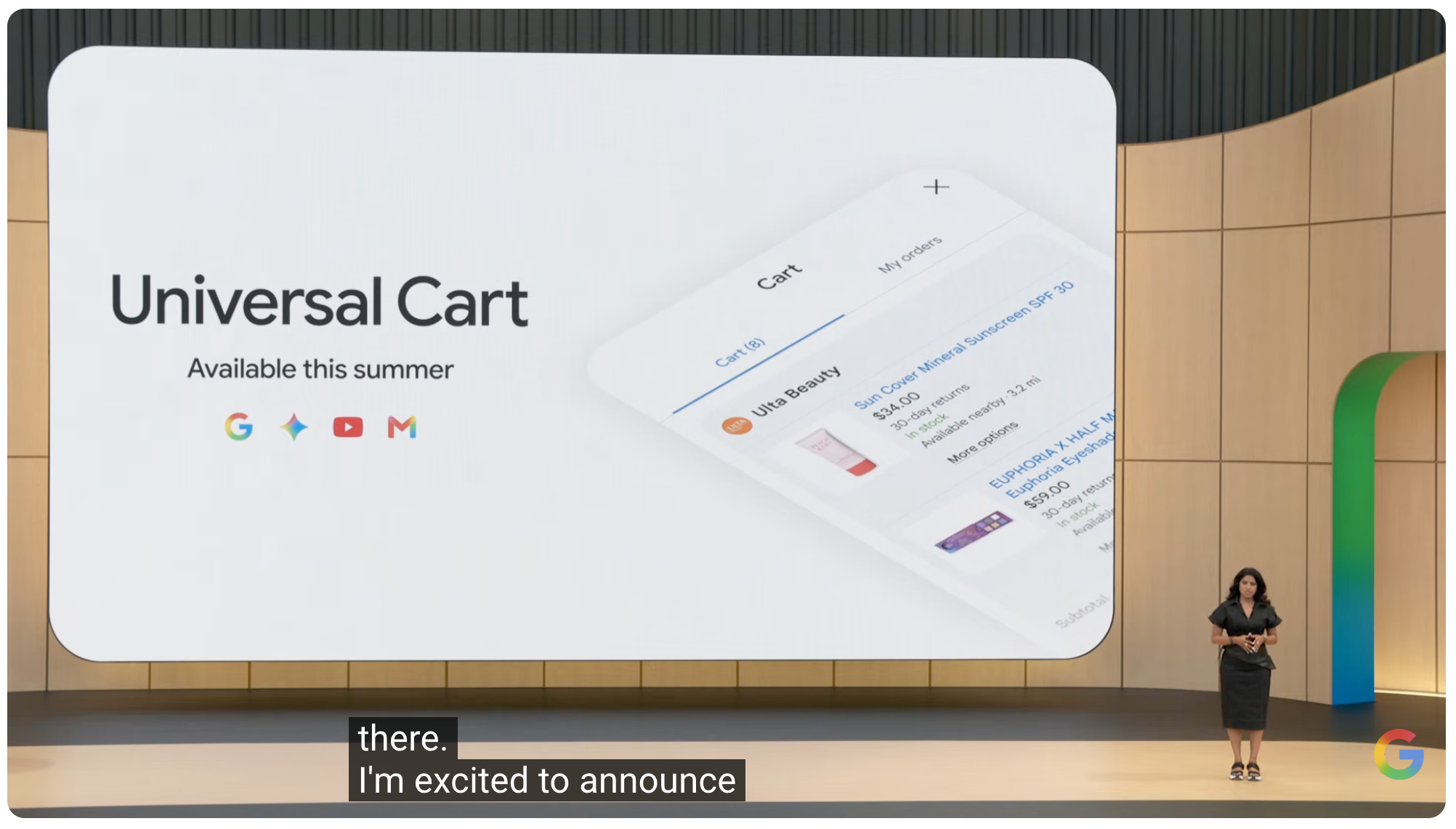
The Universal Cart, arriving this summer, aggregates products from different merchants into a single cart accessible from Search, Gemini, YouTube, and Gmail. The Agent Payments Protocol allows Google agents to complete purchases on behalf of the user, securely, under user control. If Google manages the cart and the payment, organic visibility no longer guarantees traffic to the merchant’s site.
Google is no longer building an improved search engine. It is building a platform that observes, reasons, creates, monitors, and buys on behalf of the user.
The question for SEO and marketing professionals is no longer how to rank. It is how to exist in a system that no longer needs to send users to your site to satisfy them. That requires visibility in AI-cited sources, structured data that machines can read and act on, and presence in the protocols that govern agentic commerce. Several of the features announced today are live globally. The window for early positioning is short.
.avif)



.svg)